I usually try to reflect on all of the readings for the day and to integrate them into a single focus, but today I reflect on only one verse from the Gospel. “For this is the will of my Father, that everyone who sees the Son and believes in him may have eternal life.” How and when do we see Jesus?
My insights on this come primarily from my pastor’s sermon the Sunday after Easter. As usual, he delivered a powerful message. I will paraphrase the main ideas that stuck with me here. Pastor Schneider started out with a children’s sermon in which he produced a box of cake mix and a package of flower seeds. He asked the children what they thought was inside the boxes. They knew of course. He then asked them why they thought a cake mix could turn into a cake and a seed could turn into a flower? They had all seen it happen. From little children on, we learn to make sense of the world by what we see. Seeing is believing, we are taught. That is how Thomas approached his faith. He needed to see the risen Lord’s wounds in order to believe. And Thomas did see them, and he even touched the wounds. Where does that leave us? No one since Thomas has had that experience, and yet we gather in churches on Sunday morning because we believe in the real presence of Jesus in our midst.
We need to think about the relationship between seeing and believing differently, Pastor Schneider says. We learn in this life that you can’t always even believe everything you see. Jesus knew about human skepticism. He knew he couldn’t count on material evidence to convince us that he was truly the Son of God. “I told you that although you have seen me, you do not believe,” he said. The point here is that our faith in the resurrection isn’t about the material body of Christ. What we really need to learn is how to see with our believing said Pastor Schneider. Believing is seeing.
It is through our faith that we can see Jesus. We can see the wounds and the scars of his suffering when we look at each other. When we look for Christ in pain and suffering, our own and that of others, and we believe he was sent by the Father to suffer on our behalf the ultimate wound of death, then we see the Son. Christ has died, Christ is risen and Christ will come again. All of this, we can see in each other when we sing these words. Next time you go to church, don’t just look down or straight ahead. Look around at other people. Believing is seeing.
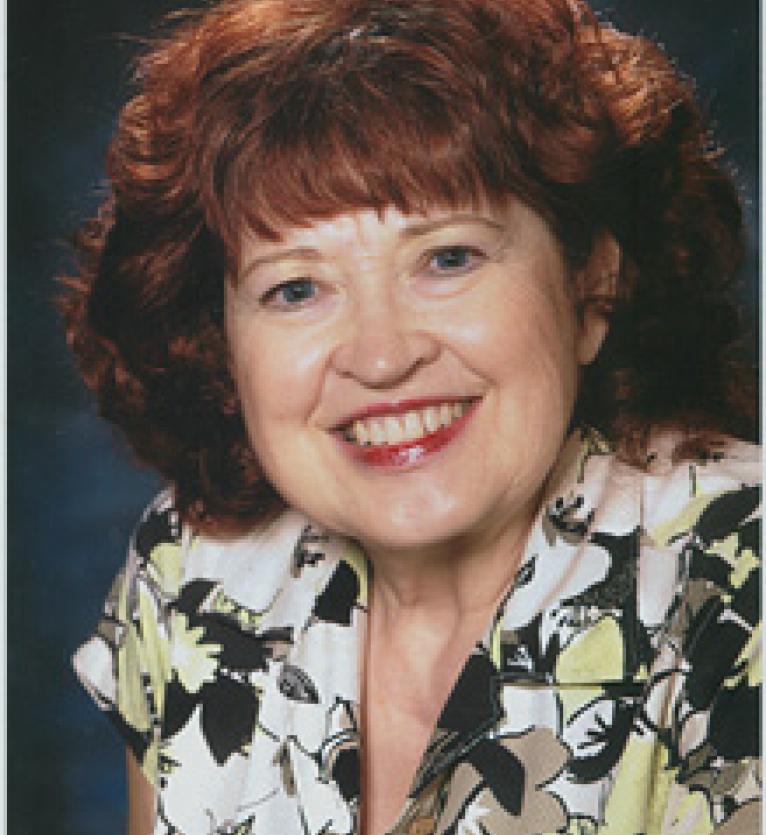
Barbara Dilly
I came to Creighton in 2000 and retired in 2020. My twenty years of teaching, research and service in the Jesuit tradition enhanced my own life. It was an exciting time of celebration. I loved teaching and interacting with Creighton students because they responded so eagerly to the Ignatian pedagogical emphasis on the development of the whole person. It is this spirit of whole person development and celebration of life that I hope to infuse in my reflection writings.
My academic background is eclectic, preparing me well for the Liberal Arts academic environment at Creighton. I earned my BA in World Arts and Cultures from UCLA in 1988 and my Ph.D. in Comparative Cultures from the University of California, Irvine in 1994. My research focused on rural communities in the American Midwest, Latin America, and Australia. I taught Environmental Anthropology, Qualitative Research Methods, Social and Cultural Theory, and Food Studies courses.
I retired to Shell Rock, a small rural community in Northeast Iowa where I enjoy gardening, cooking, quilting, driving my 65 Impala convertible an my 49 Willys Jeepster. I have lots of fun playing my guitars with friends from the Cedar Valley Acoustic Guitar Association. But most importantly, I am still working to make my community and rural America a better place. I host a community quilt studio and serve on the Mission Board of my church. I also serve as the Climate Committee Chair and on the Executive Board of the Center for Rural Affairs.