After the resurrection of Christ, a wide variety of communitarian and utopian communities sprang up in expression of Christian beliefs. While Jesus offered no blueprint for any particular social or political order, early and even present-day forms of communitarianism found these models for Christian living a good fit with the Gospel message. Ana Baptist groups like the Amish, Mennonites, and Hutterites survive to this day, bearing witness to the Christian mandate to care for each other. There is a great deal of variety among these groups and even within them. For example, the Amish allow for individual economic pursuits and unequal success, so long as members commit to sharing with those in need. Further, they maintain the equal dignity of all in their midst, regardless of their need. The needy are neither avoided nor judged less worthy. That is where many mainstream Christians differ. We find ways to exclude the needy from our midst.
We so often ignore the misfortune of others because we are unwilling to share our good fortune with them. We want to believe that the needy are at fault for having less, and we are more virtuous because of having more. But when the focus of our faith is more on following the rules as evidence of right living, or the following of an earthly power that defines the Lord’s power and strength in political terms, we are missing a central truth of the Gospel. Jesus emphatically placed more emphasis on right giving than right living. Right giving means loving our neighbors as ourselves and seeing that there are no needy persons among us. The early churches took this seriously. They saw a clear difference between things of this world and things of the Spirit. Yet gradually, earthly political powers usurped the majesty of the Lord’s kingdom for their own purposes. As a result, Christians have been struggling to keep the Son of Man uplifted as King ever since his resurrection. I pray today that we continue to trust in the Lord’s promises of eternal life and organize ourselves in ways that we can address the needs of those among us. That is where the real power is robed.
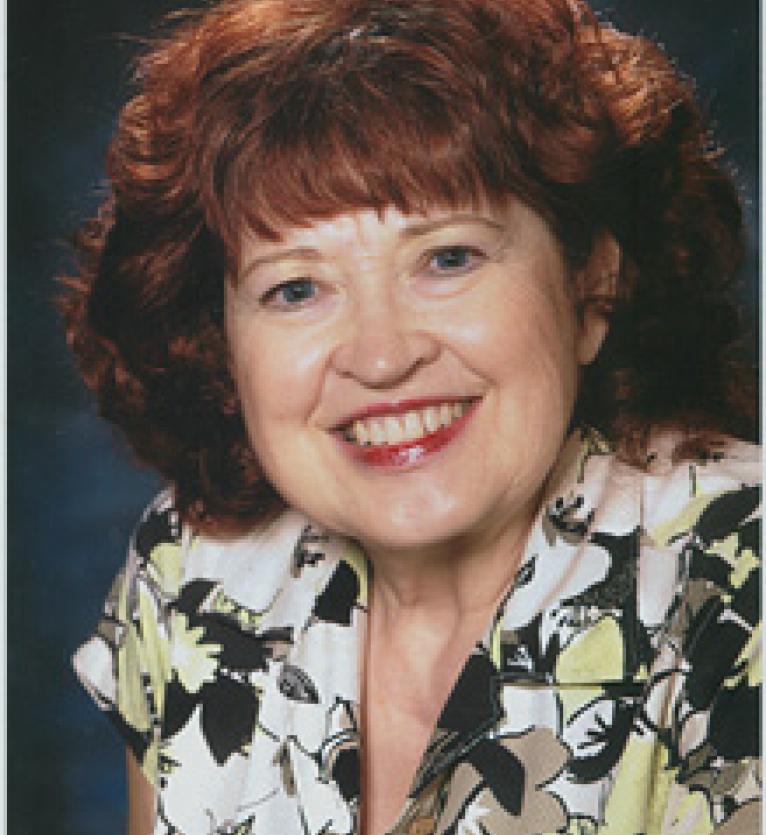
Barbara Dilly
I came to Creighton in 2000 and retired in 2020. My twenty years of teaching, research and service in the Jesuit tradition enhanced my own life. It was an exciting time of celebration. I loved teaching and interacting with Creighton students because they responded so eagerly to the Ignatian pedagogical emphasis on the development of the whole person. It is this spirit of whole person development and celebration of life that I hope to infuse in my reflection writings.
My academic background is eclectic, preparing me well for the Liberal Arts academic environment at Creighton. I earned my BA in World Arts and Cultures from UCLA in 1988 and my Ph.D. in Comparative Cultures from the University of California, Irvine in 1994. My research focused on rural communities in the American Midwest, Latin America, and Australia. I taught Environmental Anthropology, Qualitative Research Methods, Social and Cultural Theory, and Food Studies courses.
I retired to Shell Rock, a small rural community in Northeast Iowa where I enjoy gardening, cooking, quilting, driving my 65 Impala convertible an my 49 Willys Jeepster. I have lots of fun playing my guitars with friends from the Cedar Valley Acoustic Guitar Association. But most importantly, I am still working to make my community and rural America a better place. I host a community quilt studio and serve on the Mission Board of my church. I also serve as the Climate Committee Chair and on the Executive Board of the Center for Rural Affairs.