“The Christ will not come from Galilee, will he?”
You can just picture the crowd, standing around, trying to figure out who this Jesus is. Various opinions are aired: he is the prophet. He is the Christ. But if he is the Christ he can’t have come from Galilee – he must come from Bethlehem since the Christ has to be of David’s family and come from Bethlehem where David lived. The crowd is divided. Things haven’t changed much – there are still many opinions and divisions around this Jesus.
Perhaps there were Roman guards, the occupying force, in the crowd – they go to the authorities, chief priests and Pharisees – who ask why the guards did not bring Jesus to them, presumably to arrest him. Their response is telling: “Never before has anyone spoken like this man”
The Pharisees then shame them and the crowd.
But Nicodemus, himself a high-ranking member of the Sanhedrin, utters words that put the Pharisees in their place by quoting the law: ”Does our law condemn a man before it first hears him and finds out what he is doing?”
There is no answer to this argument, and, muttering against Nicodemus, the Pharisees leave “each to his own house.”
Nicodemus stands out for me in this reading, remembering he had gone to Jesus under cover of darkness , perhaps not wanting any of the authorities to know, to acknowledge Jesus’ closeness to God, to ask how it is that someone could be born again? His growth in faith and courage are shown by his standing up for Jesus in front of the Pharisees in today’s reading. And later he publicly helps the crucified Jesus with anointing.
His spiritual maturation journey can serve as a model for us. Do we have the courage to acknowledge Jesus publicly? Do we dare gently ask the right questions when Jesus is scorned? Are we brave and faithful enough to accompany Jesus through his passion and death?
Do we do any of these things for those we love? Do we do them for those we don’t love?
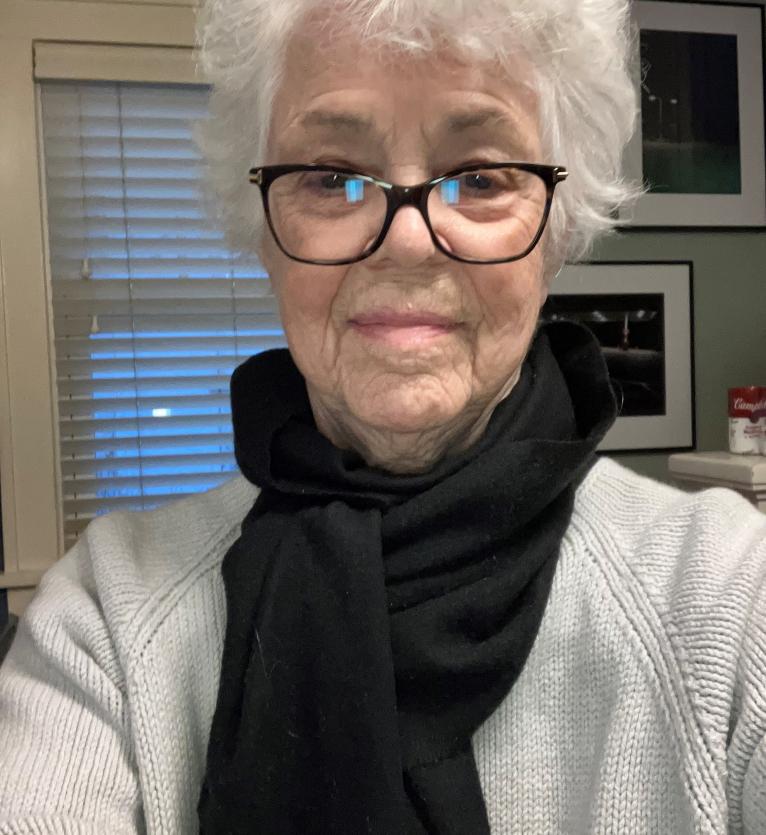
Suzanne Braddock
Creighton University and I are old friends, first as a medical resident in a program shared with The University of Nebraska then forty plus years as a parishioner at St John’s, the campus church. Now retired from a gratifying but busy medical practice I enjoy the quiet hours and nature.
Writing these reflections is a challenge and a grace, bringing me closer to the meaning of the Scriptures and the love God wants us to understand.