In the Last Supper, we see two symbolic acts of sharing by Jesus: the breaking of bread and the sharing of wine as his body and blood, and the washing of the disciples’ feet by their master.
Both actions must have appeared unusual to the apostles. Who would take bread, break it, and say, “This is my body,” or invite others to drink his blood? Equally surprising was the washing of the disciples’ feet. Culturally, such a task belonged to servants. While the disciples were confused and silent, Peter protested that his beloved master was humiliating himself and breaking social norms. Yet, despite their confusion, the disciples allowed Jesus to continue, trusting as he had often surprised them with miracles.
The deeper meaning of these actions was revealed in the crucifixion as Jesus shared his life with the wounded humanity. In this mystery, the Divine One humbled God’s own self by becoming human to serve and redeem humanity.
This reflection reminds the three ways of humility described by St. Ignatius. The first way is obedience to God in all things. The second is to take a step further where one practices the virtue of indifference to dispose oneself to God’s Will. The third is the most radical and unusual: intentionally choosing to live as Jesus lived; to choose poverty with Christ poor rather than wealth; contempt rather than honors; to be useless rather than a prudent person.
As we celebrate Jesus’ Last Supper, He invites us into His intentional way of sharing. As Ignatius teaches, it means divesting of self-love, self-will, and self-interest to invest in God’s love, God’s will, and God’s interest. We pray for the grace to respond to our Savior’s invitation to take part in his Sharing.
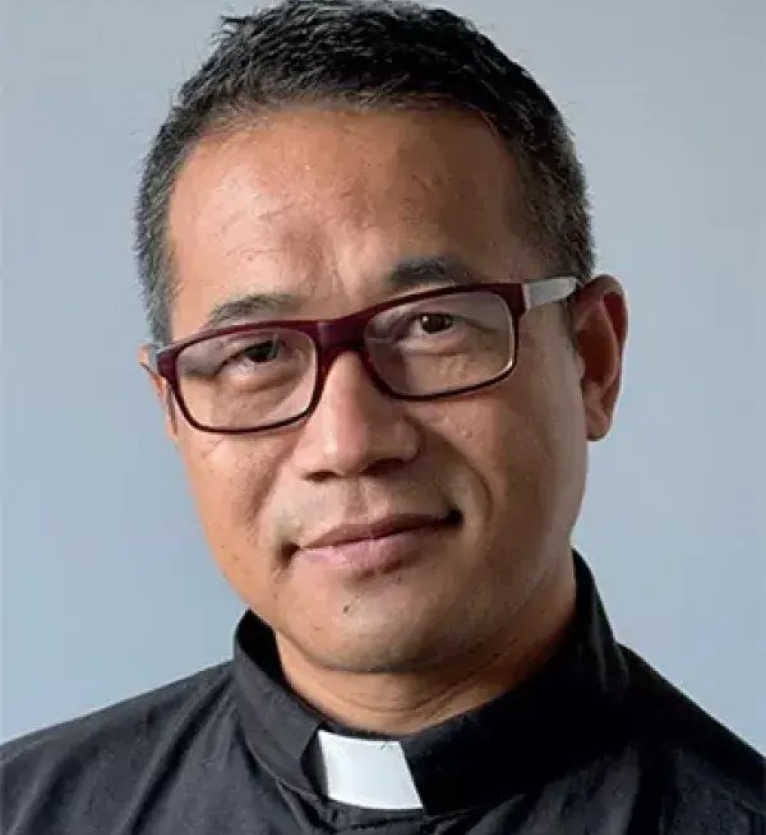
Rev. George Meze, SJ
I am Fr. Vilezo George Meze SJ, originally from India. I am doing my EdD studies and serve as a spiritual director with Campus Ministry. Before coming to the U.S., I spent a decade working in school administration among Indigenous communities in Northeast India.