Now, more than ever, in these troubling times, we should be asking, “what can we do to accomplish the works of God?” Instead, most of us are calling on God to help us. That is a good first step, but God then expects us to act appropriately on our faith. The Gospel story for today intrigues me. We read that people came after Jesus because he performed a miracle when he fed the five thousand. That is not surprising. We would do the same thing. But I was impressed that they didn’t ask him for still more miracles. Instead, they asked of him, “what can we do to accomplish the works of God?” In my experience, hardly anyone ever asks that. And hardly anyone is ready to do whatever Jesus asks of us. It appears, however, that this group was open to hearing what Jesus had to say. Based on all they had seen and heard from Jesus, by asking this question, I am convinced that they believed he was sent by God. But again, I am amazed that they expressed such a deep desire to follow him. We can learn something from them.
If we think of ourselves as members of this group, as people who believe in him, what would we look for as an answer to this question? Do we as believers express in our prayers a deep desire to follow Jesus. Or do we continue to look for more miracles in our lives to convince us that Jesus is present? To me, this story got put on record because it is one of the few times that Jesus answered a question so directly to believers. In fact, Jesus took advantage of this “teaching moment” to give us an answer to most of our questions. He knew that eventually everyone is tempted to call on God for their material needs. He invites us to do that in the Lord’s prayer when we pray “give us this day our daily bread.” But God has so much more to offer us in Jesus the Christ. Jesus teaches us here to “not work for food that perishes but for the food that endures for eternal life, which the Son of Man will give you.”
To me that means, while I am invited to pray daily for my basic needs, I should also pray for the strength of faith to believe in the one he sent to the extent that I can ask, “what can I do to accomplish the works of God?” As a believer, I know my life has more purpose in Christ than to just survive from daily bread to daily bread. Jesus doesn’t spell out that purpose in much detail because it is up to each of us in our own times and places to ask what we can do. Now, in this time of incredible human need, it is even more urgent that we each seek more than to meet our own needs. What can I do? That really challenges me. For now, it seems staying connected to others, listening to them, and staying cheerful around them is the best I can do. I call my 93-year-old father, who lives nearby but alone, several times a day. I also deliver his favorite coffee and bacon cheeseburger from McDonald’s once in the middle of the week and plan a special Sunday dinner for him at my house where we sit at far ends of the dining room table. He loves that the most. I also plan to visit the post office to pick up my mail when other people in my small community are there, taking turns going in, but standing six feet away in the parking lot to hold conversations. They wait for each other, just to get a friendly smile and to hear a cheerful voice.
If we can do nothing but maintain long-distance contact with cheerfulness and hope, we can brighten someone’s day. But when we can come together again, I pray we will be more intentional than ever to make a significant difference in the ways we care for others. Just going back to the way things were is not good enough. We can accomplish more than that.
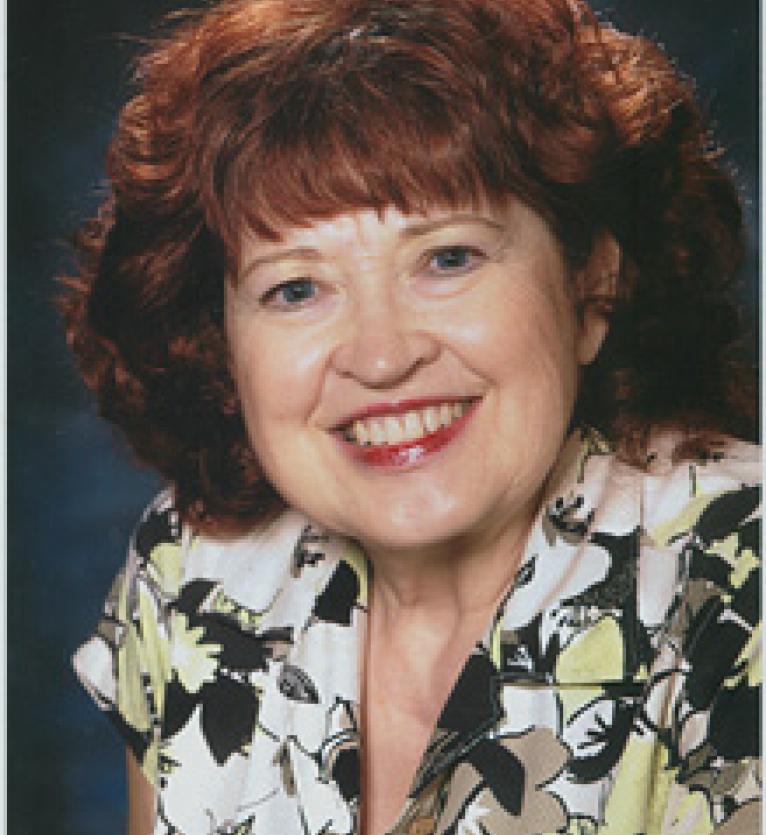
Barbara Dilly
I came to Creighton in 2000 and retired in 2020. My twenty years of teaching, research and service in the Jesuit tradition enhanced my own life. It was an exciting time of celebration. I loved teaching and interacting with Creighton students because they responded so eagerly to the Ignatian pedagogical emphasis on the development of the whole person. It is this spirit of whole person development and celebration of life that I hope to infuse in my reflection writings.
My academic background is eclectic, preparing me well for the Liberal Arts academic environment at Creighton. I earned my BA in World Arts and Cultures from UCLA in 1988 and my Ph.D. in Comparative Cultures from the University of California, Irvine in 1994. My research focused on rural communities in the American Midwest, Latin America, and Australia. I taught Environmental Anthropology, Qualitative Research Methods, Social and Cultural Theory, and Food Studies courses.
I retired to Shell Rock, a small rural community in Northeast Iowa where I enjoy gardening, cooking, quilting, driving my 65 Impala convertible an my 49 Willys Jeepster. I have lots of fun playing my guitars with friends from the Cedar Valley Acoustic Guitar Association. But most importantly, I am still working to make my community and rural America a better place. I host a community quilt studio and serve on the Mission Board of my church. I also serve as the Climate Committee Chair and on the Executive Board of the Center for Rural Affairs.