When I read today’s gospel story from Matthew my first thoughts were about my experiences of being a dad. It reminded me of when our kids would argue as children. Nancy and I have four children, two girls and two boys, mostly all grown adults now. The girls are only separated in age by about 18 months, so they grew up playing together. Often (usually daily) when they were young one of them would come to Nancy and me to tattle on the other about something the other had done. I cannot recall a time when they used the same words as Peter did when talking with Jesus. But if they had said, “How many times do I need to forgive her for pulling my hair?” I’m quite certain I would not have said seven times, and certainly not seventy-seven times. (Maybe Nancy would have, but not me) Likely I would have said something like two times and then it’s open season for retaliation. So, if I put myself in Peter’s shoes and imagine myself being him talking with Jesus, I’m feeling pretty safe with my suggestion that forgiving those who sin against me seven times is quite enough. How must Peter have felt when Jesus essentially answered, “You’re not even close, it’s seventy-seven times” – with the implied message that “you need to forgive an infinite number of times.”
Matthew’s Gospel has gotten me thinking more deeply about sin and forgiveness, in general. Growing up Catholic the notion of sin was (and still is) a “hot button” issue that has lots of charged emotions associated with it. This is probably why I have tended to avoid much reflection about sin and have opted for avoidance in every way – just don’t do it and hope for the best kind-of attitude. But as I have gotten older, and as this gospel story has prompted me to do so, I have been spending more time thinking about and reflecting on what sin actually is – and why forgiveness is so important. Afterall, a major theme within the gospels is forgiveness, of everything and everyone. So, I should probably not avoid reflecting on sin any longer.
Perhaps one of the most fundamental elements of the Catholic faith is that of the Trinity. In recent years I have done more reading and reflecting about the Trinity and have discovered that the fundamental beauty (and mystery) lies in the connectedness of the Three. There is a flow (of something) that binds the Three into One. Most have described this binding flow simply as Love. This has to be why connecting with others, with nature, and with ourselves feels so good. It allows for the connectedness flow of Love to move through all of creation.
So, as I think about the notion of sin and the essential fundamental nature of connectedness, it helps me understand both sin and forgiveness. Sin, in whatever context, seems to make sense as an intentional movement away, while love in an intentional movement towards. When we sin, we have intentionally chosen to not be connected to another person, nature, or to ourselves. We no longer allow the flow of Love through the connectedness and therefore disconnect ourselves from God that exists in all things. But when we forgive, we open (or reopen) the flow of Love through our intentional connectedness. Through forgiveness we consciously make the decision to connect with the other and allow our hearts to again give and receive the Love that is God. This is why seventy-seven times (infinity) is the answer from Jesus to Peter. To do anything less would be to cut off the flow of Love/God within, between, and among us.
No doubt forgiveness is hard. It requires intentionality, a genuine desire, and action on our part. It requires us to see beyond our offended ego to establish or re-establish the connection so “The Flow” can again flow. But all these requirements are worth the effort because we know how good it makes us and those that we forgive feel. Forgiveness brings us back to the beauty and mystery of the Trinity and to our fundamental relationship with God.
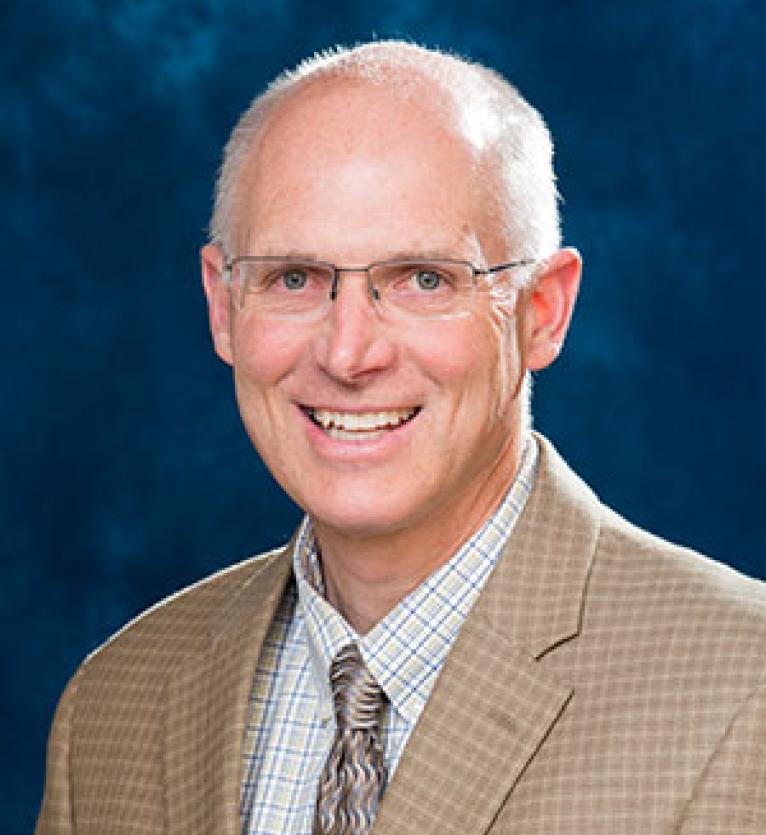
Tom Lenz
I am a native of Carroll, Iowa, and originally came to Creighton as an undergraduate student in 1988. My wife Nancy and I have four children, two of whom graduated from Creighton. I started my first faculty position at Creighton in 1999, and I am currently a professor in the Department of Family and Community Medicine in the School of Medicine. I direct a Master of Science program in Integrative Health and Wellness and teach compassion science courses to medical and dental students.
It is truly a blessing to be part of the Daily Reflections writing team. Each time I have the opportunity to write a reflection, I am reminded of how rich the readings are with wisdom, love, and kindness. And being able to connect in some way with all those who read the reflections is a joy beyond words.