When I listen to the dialogue Mark provides between Jesus and the Syro-Phoenician woman, I am humbled. Mark’s point has to be that, if Jesus’ mission was at first limited to his own people, it became universal. And, in the process, Jesus was led to see God’s work in others. As happy as I am about that “good news,” I have to ask myself, how “universal” am I? How open am I to the differences of others? How bound, limited, handicapped am I by my own convictions, world view, even my faith? How free am I to be taught, even led, by others who are very different from me? How much prejudice lurks in places all over my heart? How have these barriers stood in the way of God’s action in others, or my working with others to bring freedom, justice and peace?
I felt drawn to re-read a document from the last world-wide meeting of Jesuits to review the mission of our religious order. For our daily reflection today, I share just three paragraphs from the document on our Jesuit mission and interreligious dialogue. These words, adaptable for all believers, seem to me to flow from the spirit of Mark’s gospel. They help very much in reflecting on how we might be healed of the “demons” that possess us and how we might become healers.
General Congregation 34 encourages all Jesuits to move beyond prejudice and bias, be it historical, cultural, social, or theological, in order to cooperate wholeheartedly with all men and women of goodwill in promoting peace, justice, harmony, human rights, and respect for all of God’s creation. This is to be done especially through dialogue with those who are inspired by religious commitment, or who share a sense of transcendence that opens them to universal values.(129)
In a world where Christians comprise less than 20 percent of the population, it is imperative that we collaborate with others to achieve common goals. In the context of the divisive, exploitative, and conflictual roles that religions, including Christianity, have played in history, dialogue seeks to develop the unifying and liberating potential of all religions, thus showing the relevance of religion for human well being, justice, and world peace. Above all we need to relate positively to believers of other religions because they are our neighbors; the common elements of our religious heritages and our human concerns force us to establish ever closer ties based on universally accepted ethical values.(130)
Our service of faith takes place today in a world that is becoming increasingly conscious of the plurality of spiritual experiences in diverse religions. Dialogue helps us to recognize that these religions are graced with an authentic experience of the self communication of the divine Word and of the saving presence of the divine Spirit. In ecclesial communion we experience in Jesus Christ the uniquely concrete revelation of the divine Word and the universally significant outpouring of the divine Spirit.12 With love and conviction we share this experience with our sisters and brothers of other religions, for “we are all pilgrims setting out to find God in human hearts.“13(134)
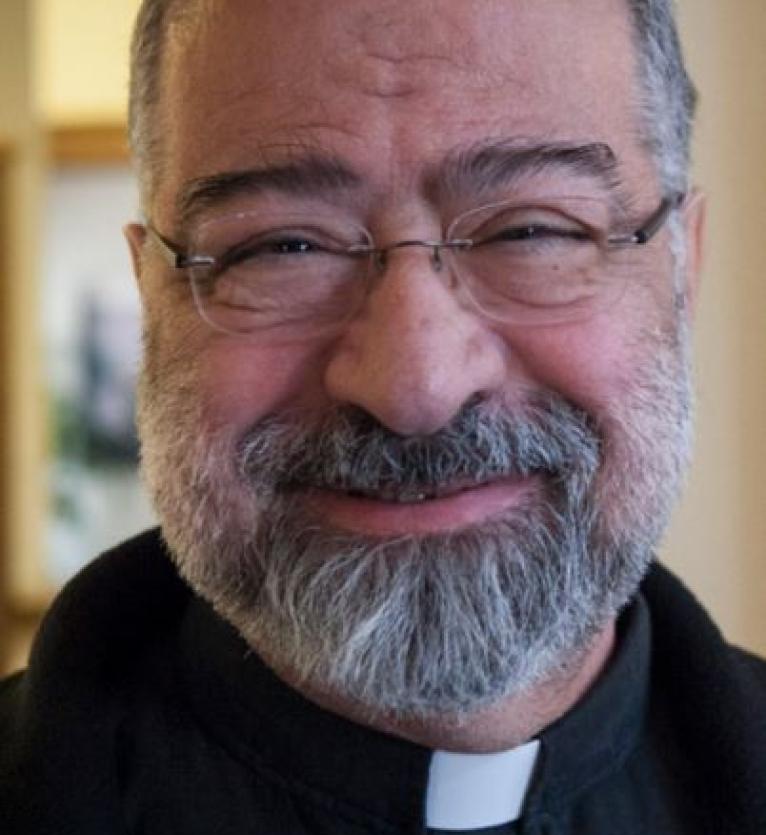
Rev. Andy Alexander, SJ
Co-founder of Creighton’s Online Ministries, Retired 2025
I served at Creighton from 1996 to 2025. I served as Vice-president for Mission for three Presidents, directed the Collaborative Ministry Office and co-founded the Online Ministries website.
I loved seeing the number of faculty and staff who over the years really took up the mission as their own and made Creighton the Jesuit university it is today. I was also consoled to witness the website – a collaborative effort - touch the hearts of so many around the world.
I’m now living at St. Camillus – a Jesuit care facility in Milwaukee. Many of my days are spent dealing with my own health issues, as I carry out the mission we’ve been given, “to pray for the Church and the Society of Jesus.”