King Jeroboam had an evil strategy to keep the people of Israel from their pilgrimages to Jerusalem to worship their God. He feared that he could not control them if he did not have control over their hearts. Their loyalty to their God threatened him. So, first, he made two golden calves to signify their God in Bethel and Dan, making it more convenient for them to worship. Next, he built temples in high places ad appointed priests from among the people loyal to him. After that he created a local feast day to duplicate the pilgrimage feast and elevated common people to positions of a priesthood established by himself. And so, the people forgot the God who had saved them and worshiped the molten gold images.
Does this sound familiar? How often does someone in power so desperately want to control us that they will turn us away from the Lord our God to false idols to secure total loyalty to their wicked schemes? And how often do evil people strategize to replace our loyalty to our values and beliefs with meaningless and harmful substitutes that serve only their aims? We must ask ourselves, when have we followed the hollow promises of those who offer us material gains and a shallow sense of security at the cost of our spiritual well-being?
The Gospel message speaks clearly to me today. “One does not live on bread alone, but on every word that comes forth from the mouth of God.” Yes, Jesus did provide bread and fish to meet the material needs of the hungry crowd, but the manner in which he did so, with compassion and care, met their spiritual needs as well. These people had followed Jesus for days without food, hanging on every word that came out of his mouth. He fed them not only food, but hope. As I reflect on the troubled times of our nation and the world, I am drawn to not only the words but the works of Jesus. People need to have their daily bread. We most certainly should be about that. But they also need caring, compassion, hope, and respect. And we absolutely need to be about that at the same time. No one needs golden images to worship instead of the living God who will help us meet the material and spiritual needs of the world. I pray that we can clearly tell the difference.
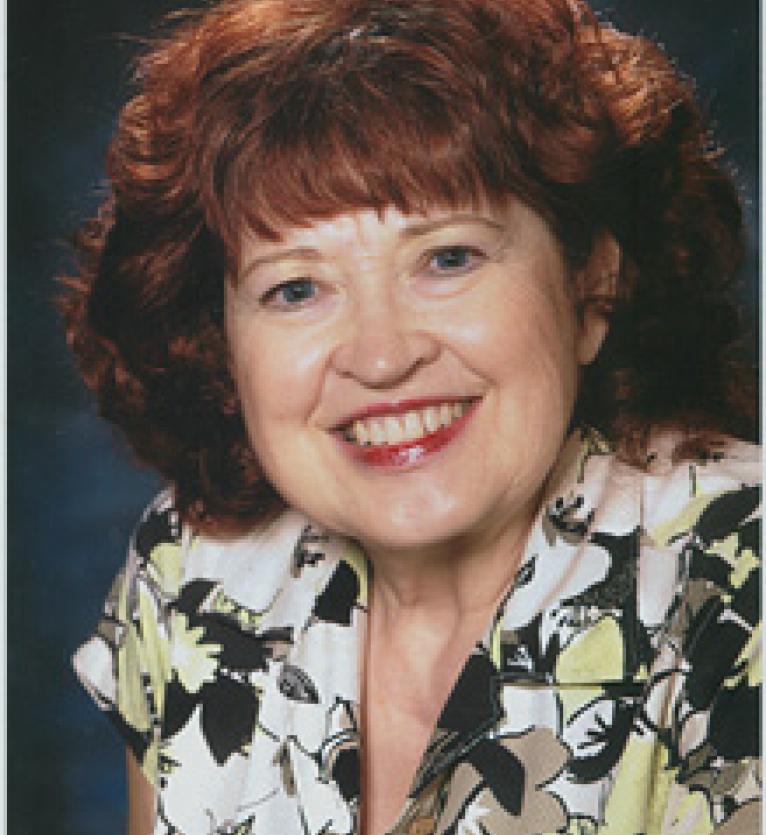
Barbara Dilly
I came to Creighton in 2000 and retired in 2020. My twenty years of teaching, research and service in the Jesuit tradition enhanced my own life. It was an exciting time of celebration. I loved teaching and interacting with Creighton students because they responded so eagerly to the Ignatian pedagogical emphasis on the development of the whole person. It is this spirit of whole person development and celebration of life that I hope to infuse in my reflection writings.
My academic background is eclectic, preparing me well for the Liberal Arts academic environment at Creighton. I earned my BA in World Arts and Cultures from UCLA in 1988 and my Ph.D. in Comparative Cultures from the University of California, Irvine in 1994. My research focused on rural communities in the American Midwest, Latin America, and Australia. I taught Environmental Anthropology, Qualitative Research Methods, Social and Cultural Theory, and Food Studies courses.
I retired to Shell Rock, a small rural community in Northeast Iowa where I enjoy gardening, cooking, quilting, driving my 65 Impala convertible an my 49 Willys Jeepster. I have lots of fun playing my guitars with friends from the Cedar Valley Acoustic Guitar Association. But most importantly, I am still working to make my community and rural America a better place. I host a community quilt studio and serve on the Mission Board of my church. I also serve as the Climate Committee Chair and on the Executive Board of the Center for Rural Affairs.