Today’s reading are all about the senses. We begin with James who reminds us that we “should be quick to hear, slow to speak, and slow to anger.” Words that are as meaningful today as they were when written over 1900 years ago. James asks us to do several difficult things.
First, to listen; not to hear, but to truly listen. For many of us – a difficult task. How often do we truly take time out of our busy and noise-filled days to listen to others without simultaneously thinking what we want to say next or, more importantly, doing the same with God?
Second, James ask us to be slow to speak. Ever in a conversation where you are not just thinking about what you want to say, but actually talking over someone else and, thus, not really listening? But, you may think, my opinion or point of view is so important and must be heard at the expense of others. We all do from time to time. But, when you think about it, there is a kind of arrogance associated with that – my view and beliefs trump yours. We need to do our best to resist this.
Third, James asks us to be slow to anger. Wow, this is a tough one. Despite the many blessings given to us by God, our society harbors a lot of anger. And as many of you may know, when we get angry while interacting with others our brain responds with an alarm system referred to as diffuse physiological arousal (DPA), which results in tunnel vision and tunnel hearing. Ever been in a heated argument with your partner and you can’t understand why he/she is so illogical? It’s because of DPA – our brains shut off and are not able to listen and process logically. So, take a deep breath, relax, reflect, and put yourself in the right frame of mind to listen to others and to God’s words.
Now, as difficult as these are, my fourth takeaway from James is even more challenging – and that is to not only be “hearers,” but more importantly, to be “doers.” As we see from our second reading today from Mark, like the blind man whose sight is restored, we are blessed to have the vision and the opportunity to act and to do the right thing according to the teachings of Jesus. We may not have opportunities to care for afflicted orphans or widows on a daily basis, but we can take measures to advocate and care for those most in need – the poor, those with medical and mental health problems, and those who are discriminated against – to name a few.
So, as we proceed with our day, I hope we can all make an effort to truly listen to not only each other, but to God, and then to become doers by following His word.
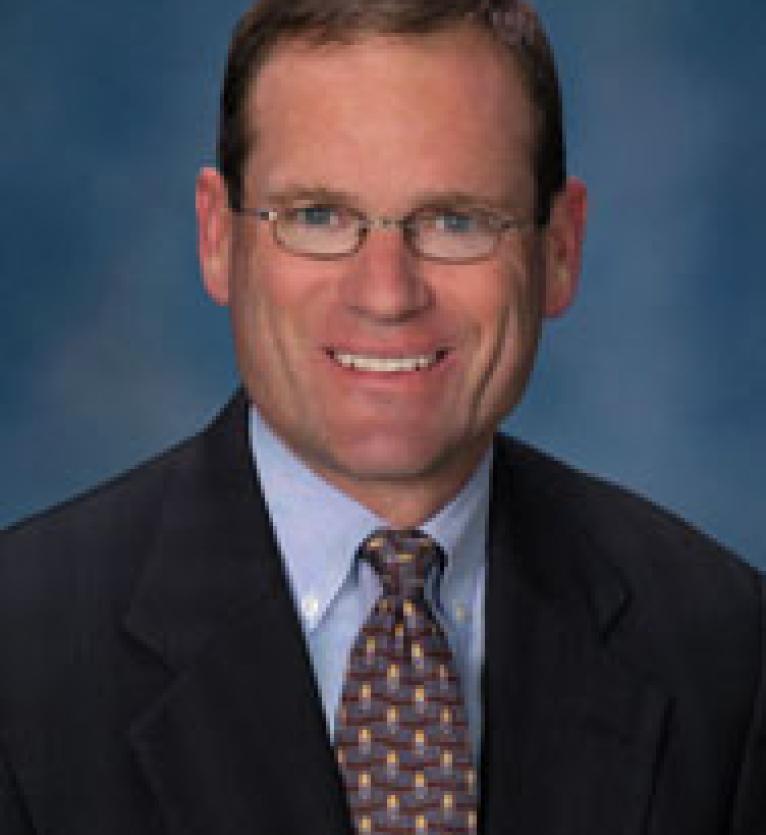
Michael Kavan
I am currently the Associate Dean for Student Affairs at Creighton University School of Medicine. I am also a psychologist and a Professor of Family Medicine and Professor of Psychiatry. I have been a faculty member at Creighton University since 1988 and teach classes on a variety of topics related to behavioral medicine, depression, anxiety, and interviewing skills for medical students and residents. In addition, I practice psychology at one of our family medicine clinics.
I am happily married to my wife, Mary, and we have four daughters. I truly enjoy working with medical students and assisting in their professional development. I like to spend time cycling, running, fly fishing, reading, and spending time with my family.
I greatly appreciate the opportunity to write these reflections. They provide an opportunity to reflect on the daily readings at a deeper level and determine how best to translate the messages into practical advice for day-to-day living. In doing this, I truly believe we may begin to live out the message of Jesus Christ.