Fr. Albert D’Silva SJ often reminded the retreatants about the essence of fasting that it should be done in secret, as Jesus said, “When you fast, anoint your head and wash your face, so that your fasting may not be seen by others, but by your Father who is in secret.” He would say that there are different ways to fast to receive graces. One that he found helpful was to eat appropriately but leave out one’s favorite food—for example, if one loves fish, forgo it and eat vegetables and bread instead. In this way, fasting becomes a quiet act of sacrifice.
Fasting therefore, is an expression of love for God. If done selfishly, it loses its spiritual value, as Jesus criticized those who made their fasting obvious through disfigured faces or sackcloth. True fasting means sacrificing comfort for the good of others, following Jesus’ ultimate sacrifice on the Cross; to lose the self in serving God.
In today’s Gospel, Jesus teaches us that while He is with us, we rejoice, but when He is taken away, we fast. This teaches that we celebrate and fast with Him, participating in both the joys and struggles of our neighbors, in whom Jesus is ever present.
A few weeks ago, I met a student who faced a painful Christmas with her sick and dying grandmother. She was reluctant to go home, fearing the pain it would bring. Yet she chose to spend Christmas with her grandmother. There was sorrow, but amid the tears came great consolation in being present for one another. True togetherness in such difficult moments is always expressed in the quiet celebration of love. In our faith, fasting becomes an opportunity to celebrate God’s love and to bring consolation to others. The grace to fast for love is itself a gift.
Rev. George Meze, SJ
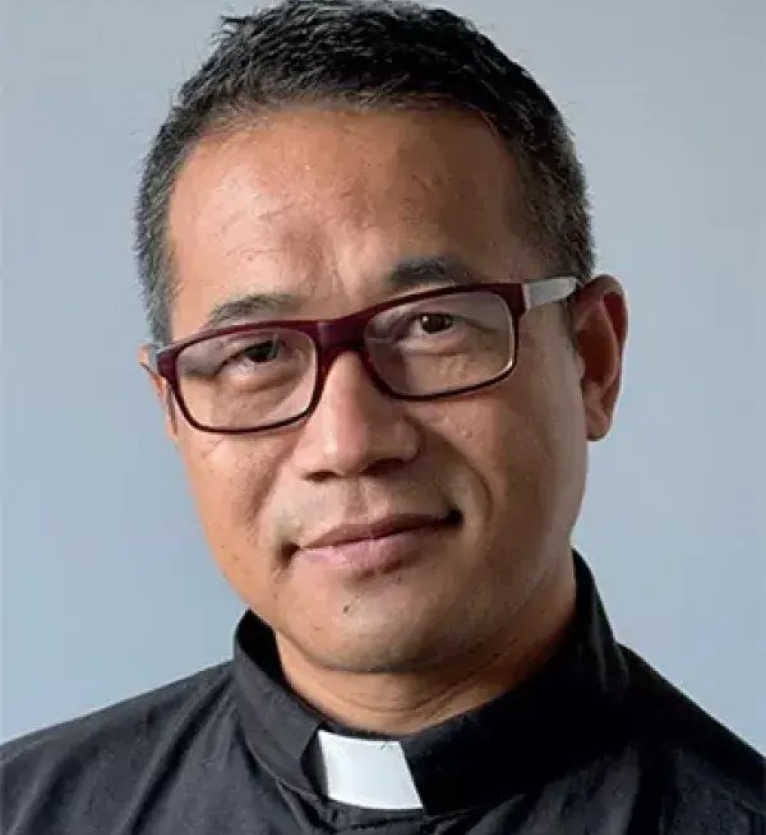
I am Fr. Vilezo George Meze SJ, originally from India. I am doing my EdD studies and serve as a spiritual director with Campus Ministry. Before coming to the U.S., I spent a decade working in school administration among Indigenous communities in Northeast India.