PREPRAYING
The flower, pansy, gets its name from the French verb, also Spanish, “to think”. When looked at from a certain angle it can appear to be pondering or thinking. Names for things have wonderful histories. For fun, look up the heritage of cantaloupe. Many of us know what our names mean or from where they get their meaning. I am a Gillick, coming from the Irish, McGullick meaning “Son of William”. I do like my family’s name, but I might appreciate it more or less if I knew more about William!
Names are important in Holy Scripture and as such Peter and Paul got their names changed after meeting Jesus. We have baptismal and conformational names indicating a special relationship with God as creator and Namer.
We prepare to celebrate the Eucharist and prepare to hear once more our various blessed names. We are in Christ, we are His Body, we are Children of God, and we are Sister/Brother. What’s in a name? A name is both a history and a future. We can pray with the identity, dignity and the missions of our various names. We can pray as well with the negative names we have assumed through our histories. We prepare to hear again, the Name that frees us from the paralysis of what is contrary to our sacramental identities.
REFLECTION
We hear in our First Reading two brief verses from the Prophet Isaiah. The verses immediately before those we hear are a reminder of the events of the “First Exodus”. It was the God of Israel who destroyed the army of Pharaoh and brought the people of Israel out of slavery.
In a sense God now is saying, “That was nothing, wait and watch what I am going to do for you now.” “Forget the past deeds and trust the way I intend to bring you, Israel, out of exile.” The exile was a result of Jacob, Israel’s growing tired of the relationship with God. Interesting, God asks the people, through the words of the prophet to forget the past and then God reminds them of their sinful pasts. By doing this, God sets in perspective the nature of the saving event which is the “Second Exodus”. “Your sins I remember no more.”
This is the final Sunday before Ash Wednesday and the beginning of the “joyful” season of Lent. Our Gospel fits the movement from Ordinary Time to this holy time of reflection. Physical disability and sin are linked together. It is a good story of friendship and faith. Jesus is preaching and is interrupted by the movement of a paralytic coming through the roof. The four friends expect Jesus to heal his physical impairment. Jesus is aware of the thinking that all physical illnesses are a result of sin. Jesus, for the first time in Mark’s gospel, begins displaying Himself as the redeeming-healer and so announces that the man’s sins are forgiven. He does not say, “Be healed.”
The real tension also begins here. The ever-present scribes make the double-meaning statement, “Who but God can forgive sins?” Their meaning is scoffing and Mark’s meaning is praise and affirmation. The tension continues as Jesus, knowing what the scribes are thinking about Him, tells the man to rise and pick up the evidence of his paralysis and go home which the man does. Jesus is beginning to do His Own “new thing.” “We have never seen anything like this.”
Jesus asks the scribes about what is easier, to forgive sins or heal someone physically. For most of us, admitting physical ailments is not always easy, but a lot easier than admitting the need for being healed interiorly. When going to the dentist I want the hygienist to marvel and the dentist to take pictures. I don’t want to hear them taking a soft-voice consult in my regard. If the evidence of too much sugar and tea is there, well, get on with it. The proof is present. That is easy. To be confronted by myself concerning my failures in responding to God’s grace and call, well, that’s more difficult because the proof is easy to ignore or deny. If somebody in my community confronts me, better said, offers me, some evidence of my communal sin and he has the evidence, well, that’s hard to accept, but easy to admit.
These coming days of Lent might be a good season of allowing Jesus to do a new thing in us. I wonder what one of my brothers, if when I am offered an offering of my offense, would say, “Thank you very much, grace is doing a new thing in me and you are helping God in my new creation.” Hmm, that brings a smile to my face. We are the new thing God is bringing about. Perhaps our not being paralyzed by guilt would be a new thing. We are not angels; we do not need God’s taking pictures of our perfections. We do not need an approver, we have confining ego-illnesses and Jesus enters through our roofs to get past our crowded defenses and He says to each of us, “Rise, let go of the evidence of our sins, and return to our dwelling places.” Lent might be for us an interior homecoming.
“I will tell all your marvelous works. I will rejoice and be glad in you, and sing to your Name Most High.” Ps. 9, 2-3
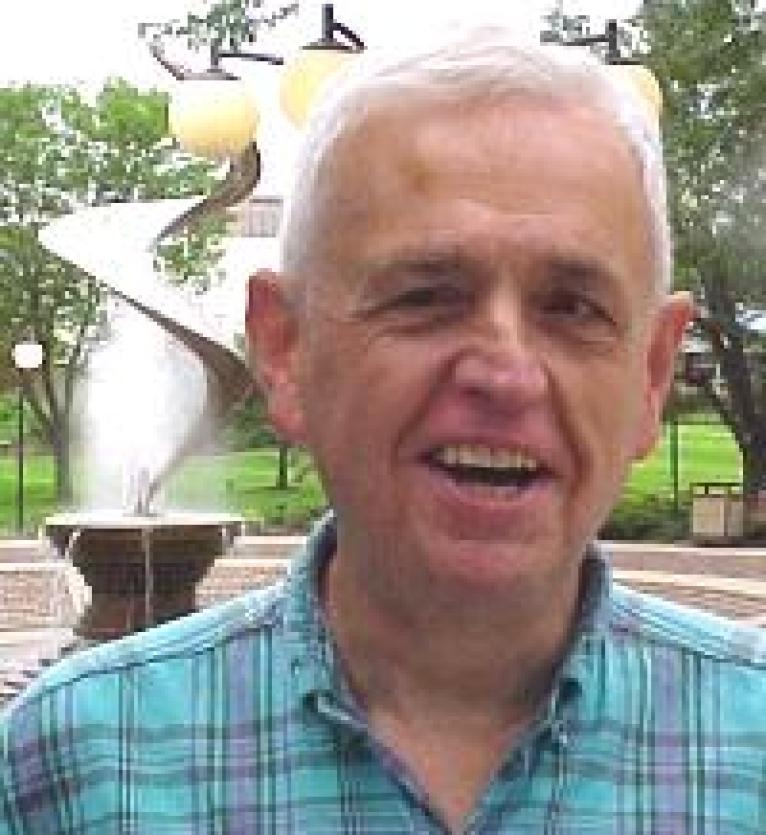
Rev. Larry Gillick, SJ
I entered the Society of Jesus in 1960, after graduating from Marquette University High School in Milwaukee, Wisconsin and attending St. Norbert College for two years. I was ordained in 1972 after completing theological studies at the Toronto School of Theology, Regis College. I presently minister in the Deglman Center for Ignatian Spirituality at Creighton and give retreats.
I enjoy sharing thoughts on the Daily Reflections. It is a chance to share with a wide variety of people in the Christian community experiences of prayer and life which have been given to me. It is a bit like being in more places than just here. We actually get out there without having to pay airlines to do it. The word of God is alive and well.