Mark’s gospel today hits close to home for me, bringing me back to my first visit to Uganda nearly 15 years ago. As a divinity student intern, I was teaching and ministering at a rural Catholic school in central Uganda, and I enjoyed attending daily 7 AM Mass on the parish grounds. One morning, a young girl, no more than 12 years, fell down during the Eucharistic prayer. She writhed on the ground and spoke in an altered voice. For a minute I felt paralyzed, not sure what was happening or how to respond. “Lay a hand on her!” someone shouted. I immediately joined the priest and others in praying over the child. Two minutes later, her body relaxed, and she got up and sat quietly in a chair. Mass resumed as if nothing had happened.
As we walked to breakfast that morning, I asked the parish priest to help me understand what I had just witnessed. “That girl has bad spirits,” he responded. “Her parents exposed her to witchcraft as a baby.”
“That doesn’t seem fair – what did she do to deserve this? Are you sure it isn’t something psychological? Do you check that first?” I asked, falling back on my Western predilections for fairness and science.
“Oh yes, we always check the psychological, and often that’s the problem,” the priest responded. “But sometimes there are spiritual issues that go deeper, ones that can only come out through prayer.”
This incident confronted the limits of my worldview and my faith, not unlike the challenges faced by the characters in today’s gospel. Like the scribes, I was arguing in favor of my own cherished explanation. Like the disciples, I lacked the strength and even knowledge to handle the problem before me. Like the father, I vacillated between belief and unbelief. That morning, I realized that there are depths to the human condition that extend far beyond my rational comprehension. I walked away with lingering doubts and lingering ignorance. Yet I also walked away with a newfound sense of humility; the world was bigger than my own past experience of it.
In a spirit of humility, then, let me close by returning to today’s opening words from Sirach. “All wisdom comes from the Lord, and with him it remains forever, and is before all time. The sand of the seashore, the drops of rain, the days or eternity: who can number these? Heaven’s height, earth’s breadth, the depths of the abyss: who can explore these?” May God call us more deeply into the depths and riches of a divine wisdom that surpasses and even confounds human expectations.
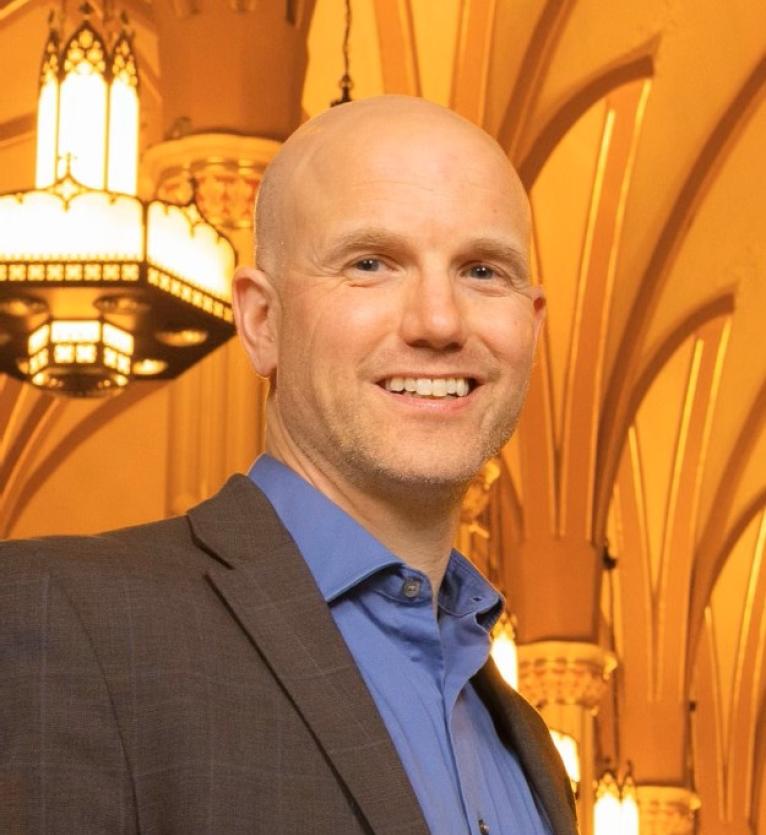
Jay Carney
I came to Creighton in 2011 and teach a wide range of classes here, from freshman theology through graduate seminars in Christian spirituality. My research engages questions of reconciliation, theology of sport, and World Christianity, especially Catholicism in modern Africa.
I am married with four children in secondary school and college. My wife Becky is a remarkable soulmate and friend, and our children have given both of us much love and laughter (and, of course, a few wrinkles). I grew up in the Washington, DC area and have also lived in Wisconsin, North Carolina, Arkansas, and Uganda. In my spare time, I enjoy reading, running, cycling, soccer, food, fellowship, and listening to music of all genres.
Writing Collaborative Ministry reflections is humbling…I’ve gained newfound respect for the homilist’s task! I feel that I am preaching to myself as much as anyone else. It’s wonderful to know that so many people are walking together as disciples of Jesus Christ. Thank you for your prayers!