Where does God dwell? It is this question that hovers over both of today’s readings.
Our first reading represents the fulfillment of King David’s great hope – the Ark of the Lord will now have a “princely house,” ensconced in the first Temple that was Solomon’s greatest legacy to ancient Israel. This Temple was no mean achievement, especially when one considers the labyrinthine journey Israel took from Egypt through the Wilderness to the Promised Land. It is no wonder that “the entire community of Israel” comes up with King Solomon, sacrificing “sheep and oxen too many to number or count.” The Bible could end right here in 1 Kings 8:13. Wrap it up and tie it with a bow.
If only things were so neat! But Israel’s history is nothing if not messy. Solomon’s beautiful temple lasts 400 years but is ultimately destroyed by the Babylonians; its successor made it over 600 years but could not survive the Romans. Yet God is bigger than Israel’s checkered political history. God is bigger than our houses, our dark clouds, our holy of holies, and our abundant sacrifices. God meets us by Lake Gennesaret, where the sick and their friends literally “scurry about” to receive a healing touch. God meets us in the midst of persecution, as we learn from today’s patroness, the virgin martyr St. Agatha. God meets us in the glorified humanity of the crucified and risen Jesus Christ, entering fully into and transforming our own humanity. God dwells wherever we seek him in self-giving love.
Let’s start scurrying.
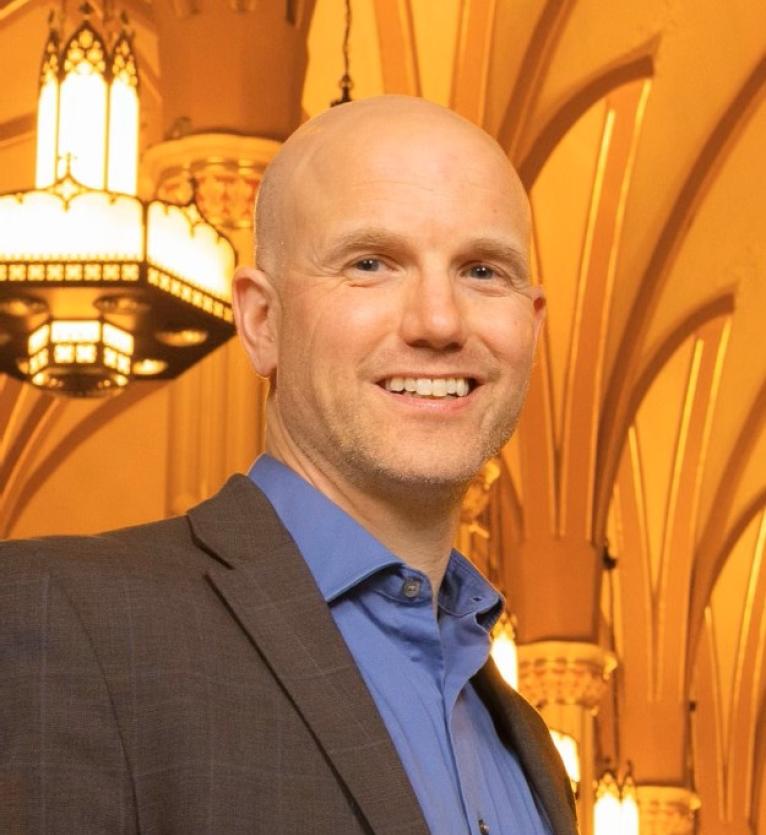
Jay Carney
I came to Creighton in 2011 and teach a wide range of classes here, from freshman theology through graduate seminars in Christian spirituality. My research engages questions of reconciliation, theology of sport, and World Christianity, especially Catholicism in modern Africa.
I am married with four children in secondary school and college. My wife Becky is a remarkable soulmate and friend, and our children have given both of us much love and laughter (and, of course, a few wrinkles). I grew up in the Washington, DC area and have also lived in Wisconsin, North Carolina, Arkansas, and Uganda. In my spare time, I enjoy reading, running, cycling, soccer, food, fellowship, and listening to music of all genres.
Writing Collaborative Ministry reflections is humbling…I’ve gained newfound respect for the homilist’s task! I feel that I am preaching to myself as much as anyone else. It’s wonderful to know that so many people are walking together as disciples of Jesus Christ. Thank you for your prayers!