O, to be like one of the disciples, to whom Jesus explained everything in private as the Gospel lesson in Mark tells us. What did he tell them about the Kingdom of God that he did not tell the crowds of ordinary people to whom he spoke through parables? Did he make God’s message clearer to them? I don’t know the answer to that. But what can be much clearer than the image of a tiny mustard seed growing to become a large plant or a kernel of corn growing to a plant that yields a thousand fold in the harvest? Even a child can understand these images of the Kingdom of God as a reality that expands miraculously as our faith grows.
But can we simply live by faith? While the idea is not complicated, the practice seems to be for most of us. We lose our confidence and our faith dims. We struggle with suffering and we draw back, seeking more certainty, more details, and more reassurance. But the Old Testament lesson and the Psalm tell us that during times of affliction, we should be even more confident that God’s will and the Kingdom of God are our refuge. Even while suffering, we need to endure and continue to do the will of God to keep our lives on track. Trusting in the Lord and doing the will of God will make our steps more sure and give us more confidence in God’s promises.
As I reflect on these messages, I make the connections between these lessons and the sermon I heard at my church on the first Sunday after Epiphany this year. Our pastor reminded us that we would experience times in the midst of life’s distresses where we would lose our confidence in ourselves and our faith. Those distresses could shake our beings and threaten our sense of our very identities. When than happens, our pastor said, we should draw on our baptism experience and the promises God made to love us and care for us as a member of the body of Christ. Drawing closer in is how we can experience the Kingdom of God and live by faith in confidence and without fear. That enlightenment also means that we should readily and without judgment welcome others into the Kingdom through our church communities. We were reminded that if we would love each other and reassured each other of God’s love, we would see the Kingdom of God grow miraculously. Today I pray that church communities everywhere could confidently love all who seek the Kingdom of God. Thy Kingdom Come. Amen.
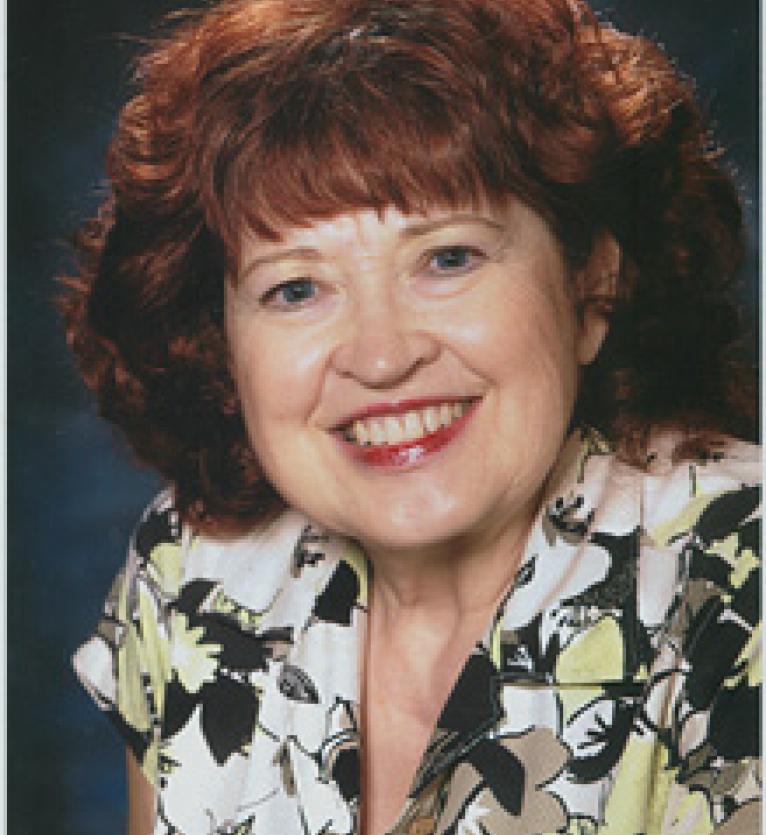
Barbara Dilly
I came to Creighton in 2000 and retired in 2020. My twenty years of teaching, research and service in the Jesuit tradition enhanced my own life. It was an exciting time of celebration. I loved teaching and interacting with Creighton students because they responded so eagerly to the Ignatian pedagogical emphasis on the development of the whole person. It is this spirit of whole person development and celebration of life that I hope to infuse in my reflection writings.
My academic background is eclectic, preparing me well for the Liberal Arts academic environment at Creighton. I earned my BA in World Arts and Cultures from UCLA in 1988 and my Ph.D. in Comparative Cultures from the University of California, Irvine in 1994. My research focused on rural communities in the American Midwest, Latin America, and Australia. I taught Environmental Anthropology, Qualitative Research Methods, Social and Cultural Theory, and Food Studies courses.
I retired to Shell Rock, a small rural community in Northeast Iowa where I enjoy gardening, cooking, quilting, driving my 65 Impala convertible an my 49 Willys Jeepster. I have lots of fun playing my guitars with friends from the Cedar Valley Acoustic Guitar Association. But most importantly, I am still working to make my community and rural America a better place. I host a community quilt studio and serve on the Mission Board of my church. I also serve as the Climate Committee Chair and on the Executive Board of the Center for Rural Affairs.