In today’s first reading Samuel chides Saul for being satisfied with burnt offerings to the Lord while still falling short of what God really is asking. The psalm follows a similar theme. In today’s Gospel, Jesus is asked why His disciples do not fast like others do. This question sounds pious, even reasonable. Fasting can be a good religious practice, but beneath it lies something more subtle. Jesus’ response exposes the danger of self-righteousness. Rather than a rejection of tradition, I see this as a refusal to let outward actions become a substitute for real conversion.
I recognize how easy it is to fall into the same trap. We inherit rich practices: fasting, prayer routines, devotions, and moral disciplines. These are gifts, but they can quietly become tools for comparison. I can begin to think that I go to Mass more often, I follow the rules more carefully, or I’m not like those who don’t take their faith seriously. Without noticing, I shift from gratitude to judgment.
Jesus answers the question about fasting with the image of a wedding feast. The Bridegroom is present and this is a time for joy. Unfortunately, self-righteousness tends to forget shared joy. It can treat religion as a test to pass rather than a relationship to receive. When I focus on how well I am doing, I tend to stop paying attention to whether I am actually encountering Christ.
Self-righteousness clings to familiar forms not because they lead to love, but because they can make me feel secure and superior. The Gospel calls me beyond where I am comfortable to new levels of mercy, humility, and trust. Jesus gives two more images in today’s reading: new cloth added to an old garment, and new wine poured into old wineskins. The old garment and old wineskins resist being stretched. I must admit that the Gospel is always stretching me. Rather than seeing these two images as a condemnation of that which is old, I find them to be warnings against rigidity.
In both the politics and religion of today’s world, I ask myself am I “traditional” and “faithful,” or am I “open” and “progressive”? The labels differ, but the danger is the same. I am tempted to define myself as over and above others instead of as a sinner in need of grace. Self-righteousness can convince me that the problem is out there, rather than in my own heart.
I find myself challenged to examine not just what I practice, but why. This is the basis for my prayer today.
Dear Lord,
Help my devotions to make me more merciful.
Allow my convictions to lead me to listen more deeply.
Aid me in focusing fasting and abstinence so that they become means to spiritual growth.
Guide my religious practices to lead me to compassion, patience, and repentance.
And grant me the ability to rejoice even when God acts outside my expectations.
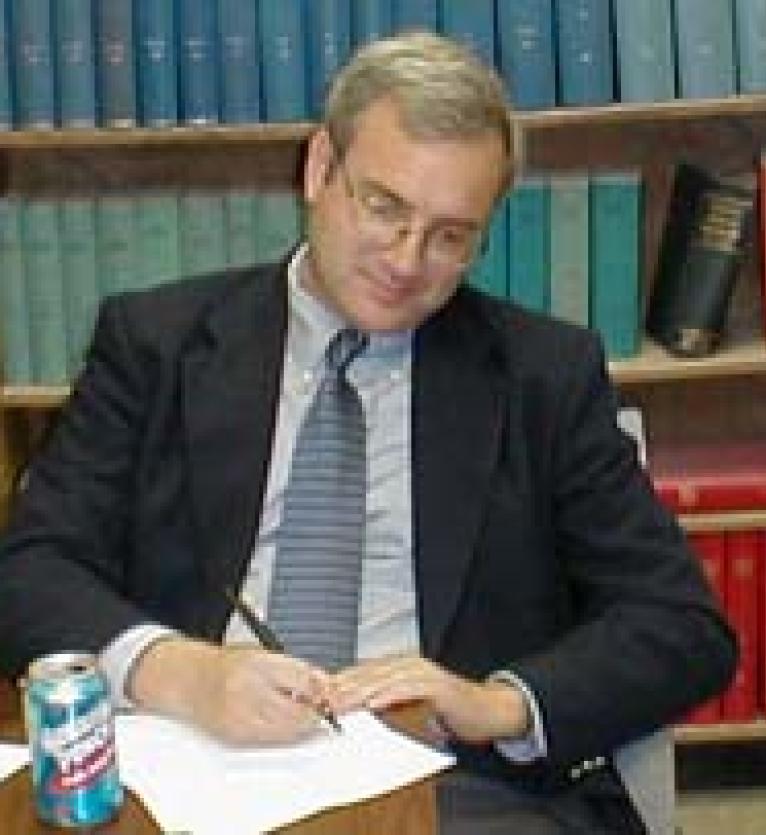
Mike Cherney
I grew up in Milwaukee and have lived in Madison, St. Paul, Hamburg, Geneva, Omaha and Boston. I taught for 27 years in the Creighton Physics Department. Now I am mostly retired and have returned to the Milwaukee area where my wife recently became President of Mount Mary University. I continue to work with Creighton students on projects in high energy nuclear physics at Brookhaven National Laboratory on Long Island and at CERN just outside Geneva, Switzerland. We have two sons and three grandchildren who all live in the northern suburbs of Chicago.
I am a person who asks questions. This often leads me down a challenging path.