Today’s readings contrast the long-term perspective of legacy with the short-term progression of the life of plants – or so it would seem.
Today is the feast day for St. Thomas Aquinas, a priest and doctor of the Church, who left an enduring legacy of contributions to the good of the Church. Writing in the thirteenth century, St. Thomas aimed his Summa Theologica at instructing Christian novices. This work still instructs us today, while also challenging and sometimes perplexing us. Near the end of his life, St. Thomas had an encounter with God that affected him profoundly. He had written a text on the Holy Eucharist, which he offered before God for His judgment. A mystical exchange occurred in which he received a response that God was indeed pleased – he had written well. Soon after this encounter, St. Thomas went into a long period of silence. He told his friend, “I can write no more. All that I have hitherto written seems to me nothing but straw.” He later revealed that characterizing his works as straw was based on comparing what had been revealed to him supernaturally, not that his work was not good.
The desire for a legacy – to make a lasting impact felt in future generations – runs deep within us. Most won’t match the legacy of Thomas Aquinas or of King David, who is the subject of our first reading. We are all like David, as our “time will come” and we will “rest with our ancestors.” This much is certain. Whether God will raise up something lasting that future generations will recognize is not up to us; it is in God’s hands.
Moreover, what we perceive as lasting may not be so. David wanted to build a temple – a house for God – but temples built of stone and wood are temporal. How about a living legacy from your offspring? These may also disappoint us. Surely David would have been heartsick over his son, Solomon, whose ability to execute the truth fell far short of the wisdom he had been given. Yet downstream, far removed in time from Solomon, our Lord himself would come from the line of David. David also could not have imagined his character and the nature of his Kingdom.
Today’s gospel includes the parable of the soils, which our Lord himself explains so that his disciples will understand. The soils give us types or examples along with the outcomes (legacies) they produce. The quality of soil develops over eons and is resistant to change, but we can affect the growing conditions in our own lives. We can also recognize our need for help and cooperate in receiving it. All of us can use some spiritual weeding to root out the effects of sin, along with some organic matter to help break up the hardness wrought by our own stubbornness. These helps come to us through grace and divine mercy, but we must cooperate to bring them to fruition. The waters of our baptism start this process. In short, we need the Church. This is not a quick fix from a self-help guru, but a lifetime project of growth in love. Our choices matter in this world, but the end result may not be ours to determine.
As St. Thomas indicates, the divine legacy prepared for us is more wondrous than the meager results we can muster, even with the greatest of skill and diligence in collaborating with the grace and mercy of God. The redeeming love of God works wonders that we barely understand or grasp, despite intense study and learning. We live, and will live, in the Kingdom of our Lord, which has no end. Thanks be to God.
Edward Morse
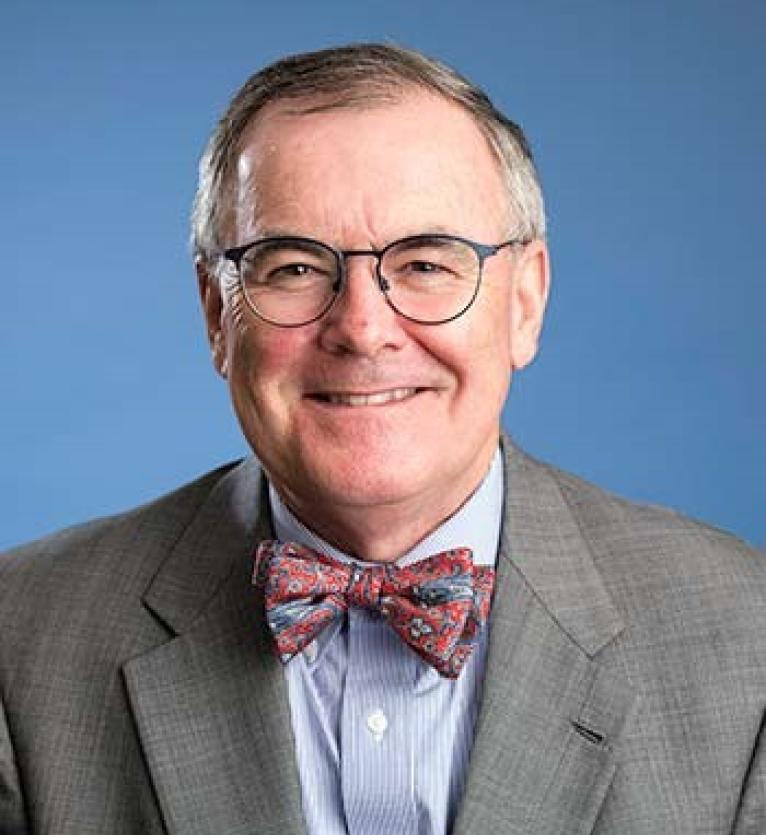
Ed Morse is a professor of law who holds the McGrath North Endowed Chair in business law at Creighton. University School of Law. He and his wife Susan are Catholic converts. Together, they operate a family cattle farm in rural Western Iowa.
Writing these reflections over the past fifteen years has helped me to learn and grow in faith. Sometimes it has also chastened me by reminding me of the constant need to practice what we have learned as we live out our faith journey together. I am grateful for feedback and encouragement from my fellow travelers.