Perhaps it is because I am very much focused on global peace today that the readings lead me to think about the relationship between peace and justice. I’ve just finished reading a book by a fellow Lutheran and former pastor Rev. Dr. Jerry Pedeson titled Unfinished Journey: From War to Peace, From Violence to Wholeness. The next book on my list will be my colleague Dr. Roger Bergman’s book Catholic Social Learning: Educating the Faith That Does Justice. Both of these books identify the practical steps Christians need to take in developing a life of peacemaking and doing justice. So often, I think, we read the words that we read today “Sow for yourselves justice, reap the fruit of piety; break up for yourselves a new field, for it is time to seek the Lord, till he come and rain down justice upon you” and we don’t know what that means.
We need help with these inspiring, yet difficult words. I’m very thankful for people like Dr. Pedersen and Dr. Bergman who have devoted their professional and personal lives to learning and teaching peacemaking. Their work is both pastoral and uncomfortably prophetic, scholarly and yet humble. Making peace with peace making is not easy. I’ve come to think that it means that we must constantly seek to the Lord in new ways all of the time. Piety, which can be an overly sentimental emphasis on devotional experiences, can sometimes be a shallow excuse for a deep commitment to serve God, but in the reading from Hosea today, I think it is calling us to devout action in a new way. As I reflect on how can I sow for myself justice and reap the fruit of piety, I think I am called to very deliberate action. That action seems to be the breaking up of a new field. I feel called to seek the Lord in a new way when Hosea reminds me it is time to seek the Lord. And in the Gospel for today, Jesus says that we are to proclaim, “The Kingdom of heaven is at hand.” There is a sense of urgency in these words. And certainly our world is in urgent need of peace and justice.
So there should be a renewed sense of urgency in how I seek the Lord if peace and justice is as important to me as it is to God. I can’t ever get comfortable with where I am on those issues. As a farmer’s daughter, I know what it means to break a new field. That is where the most fertile soil is found. But it is also the most challenging way to get a harvest. I’ve got the old sod breaker plow that my great grandfather brought with him to Iowa where he broke new ground in the 1880s. It is a heavy and strong piece of iron I can barely lift and it took very powerful oxen to pull it through the thick rich sod. So where am I going to find new ground and what am I going to use to break it so I can await the raining down of justice that the Lord will surely bring? I don’t know right now. But the lessons today bring me to a new sense of urgency. If I seek, I will find the new ground. And I think I can use the writings of other teachers of peacemaking like Dr. Pedersen and Dr. Bergman to help break it up. Since they are drawing on the Word of God in the Bible, I guess that becomes the plow and they are the oxen. Today I give thanks for them and their hard work. I also give thanks for Hosea and his beautiful poetry:
“Sow for yourselves justice, reap the fruit of piety;
Break up for yourselves a new field, for it is time to seek the Lord,
Till he come and rain down justice upon you.” Amen.
Barbara Dilly
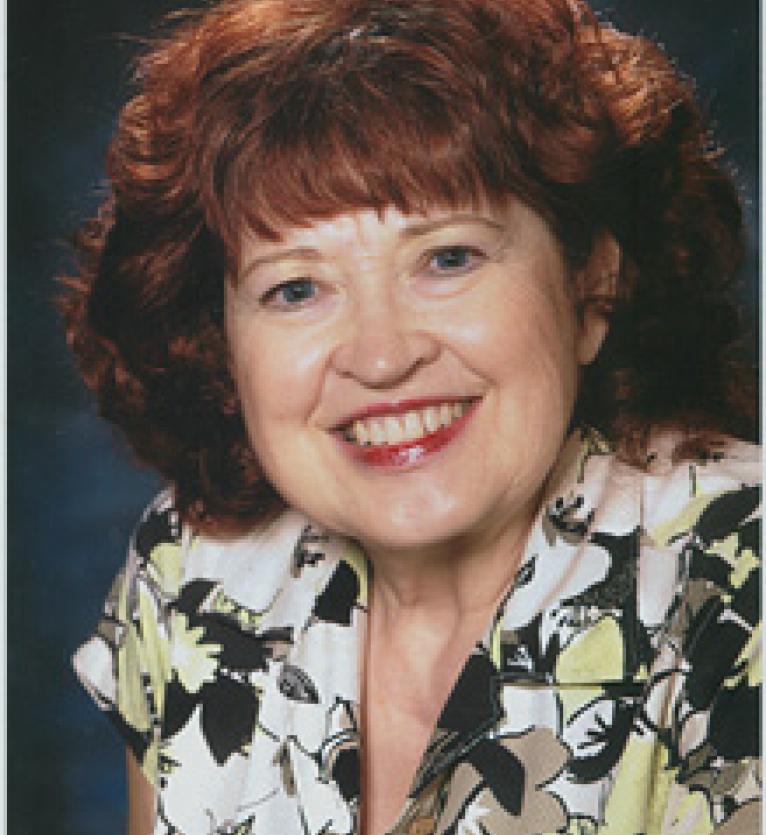
I came to Creighton in 2000 and retired in 2020. My twenty years of teaching, research and service in the Jesuit tradition enhanced my own life. It was an exciting time of celebration. I loved teaching and interacting with Creighton students because they responded so eagerly to the Ignatian pedagogical emphasis on the development of the whole person. It is this spirit of whole person development and celebration of life that I hope to infuse in my reflection writings.
My academic background is eclectic, preparing me well for the Liberal Arts academic environment at Creighton. I earned my BA in World Arts and Cultures from UCLA in 1988 and my Ph.D. in Comparative Cultures from the University of California, Irvine in 1994. My research focused on rural communities in the American Midwest, Latin America, and Australia. I taught Environmental Anthropology, Qualitative Research Methods, Social and Cultural Theory, and Food Studies courses.
I retired to Shell Rock, a small rural community in Northeast Iowa where I enjoy gardening, cooking, quilting, driving my 65 Impala convertible an my 49 Willys Jeepster. I have lots of fun playing my guitars with friends from the Cedar Valley Acoustic Guitar Association. But most importantly, I am still working to make my community and rural America a better place. I host a community quilt studio and serve on the Mission Board of my church. I also serve as the Climate Committee Chair and on the Executive Board of the Center for Rural Affairs.