It does not surprise me that so many illustrations of justice in both the Old and the New Testament center on living in abundant lands where food is plentiful and their homes are safe. We should all be able to relate to that vision in every age. What is more basic than the human relationship to the earth, to God, and other humans? Amos reports in the Old Testament today that the Lord will create a new order in which the people of God will be restored to the earth and to their homes. There they will rebuild their gardens and their lives. This is what God wants for all peoples – to live in peace and justice in their own lands yielding many benefits.
Yet, that seems so difficult to achieve in so many parts of the earth. Peoples everywhere seem to think it is their right to run other peoples from their lands, from their gardens, and from their homes. This is nothing new. The Old Testament is full of tragic stories of violence and rage toward others over lands and resources. So, how do God’s people learn to live in peace? How do they learn to live in kindness and truth? How do they learn to walk with justice? I agree with Pope Francis that it is when they learn to care for their common home and for others, to protect all the lands of the earth and their ability to provide for the needs of all people. We certainly aren’t there yet. We who claim to follow Jesus have a lot of work to do if we want to dwell in our own land in peace and justice with all that we need restored to us. To achieve that, we should also help others to enjoy the same blessings. Food and environmental justice, it seems to me, is a good focus for that work.
Jesus tells us we can’t get on with what it means to follow him by putting new wine into old wineskins. I think that means that if we hear Jesus and follow him, we are not just simply the same old people who got chosen to be special. We are a transformed people. If we follow Jesus, we see a very different relationship between ourselves and God, between ourselves and the earth, and ourselves and others. Our relationship with God is not just about God being with us when we take what we need for ourselves. When we are transformed, we find a way to be men and women with and for others.
The proclamations of peace and justice as central to our salvation that we read about in the Psalms today are difficult for most of us to hear because they are not just about our well-being as the people of God. Our salvation isn’t just about the restoration of all that was taken from us unjustly. It is about something much bigger. It always is with God. It is about working toward that restoration for others, too. It seems to me that the lessons for today tell us that our salvation requires us to become transformed, to be made new, like wineskins, to fully follow Jesus. It isn’t about following the old religious rules of piety better, it is about learning to live in new and better ways, in ways of peace and justice. That certainly is my biggest challenge, daily, in following Jesus. I always want everything to work out for me. I follow the rules and think that is how I should be rewarded. But at the end of the day, it is about something a lot bigger than that. It always is with God. I think the lessons today tell me that it is more about hearing the voice of Jesus and letting that voice transform me. The question I need to ask at the end of the day is, “Did I get my benefits, or was I transformed a bit more to let peace and justice walk before me in my steps to help others also get theirs?”
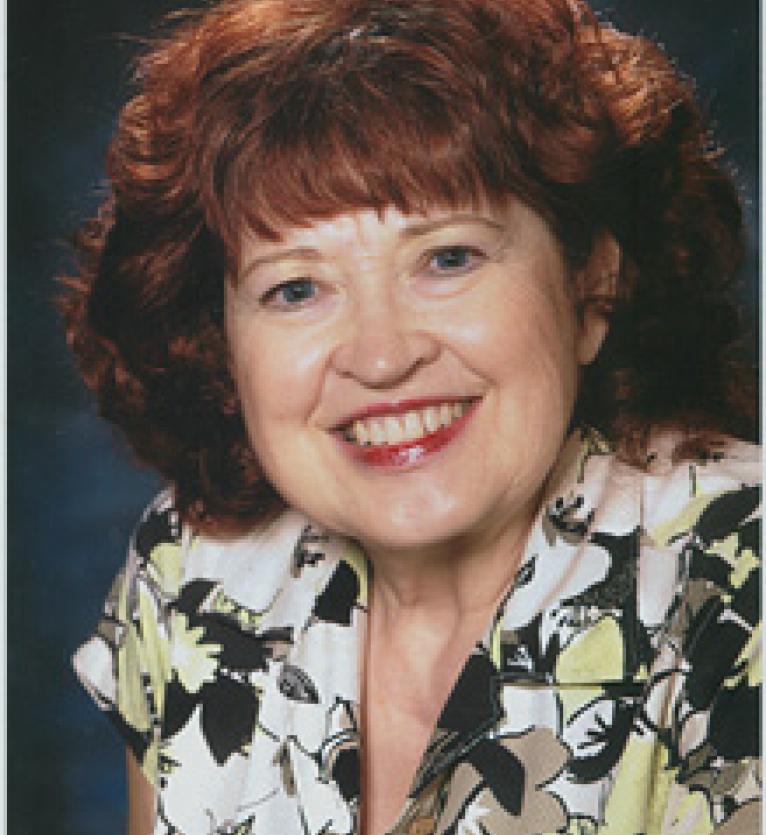
Barbara Dilly
I came to Creighton in 2000 and retired in 2020. My twenty years of teaching, research and service in the Jesuit tradition enhanced my own life. It was an exciting time of celebration. I loved teaching and interacting with Creighton students because they responded so eagerly to the Ignatian pedagogical emphasis on the development of the whole person. It is this spirit of whole person development and celebration of life that I hope to infuse in my reflection writings.
My academic background is eclectic, preparing me well for the Liberal Arts academic environment at Creighton. I earned my BA in World Arts and Cultures from UCLA in 1988 and my Ph.D. in Comparative Cultures from the University of California, Irvine in 1994. My research focused on rural communities in the American Midwest, Latin America, and Australia. I taught Environmental Anthropology, Qualitative Research Methods, Social and Cultural Theory, and Food Studies courses.
I retired to Shell Rock, a small rural community in Northeast Iowa where I enjoy gardening, cooking, quilting, driving my 65 Impala convertible an my 49 Willys Jeepster. I have lots of fun playing my guitars with friends from the Cedar Valley Acoustic Guitar Association. But most importantly, I am still working to make my community and rural America a better place. I host a community quilt studio and serve on the Mission Board of my church. I also serve as the Climate Committee Chair and on the Executive Board of the Center for Rural Affairs.