Jesus tells us today that anger toward other brothers gets us in trouble with God, as does insulting other people or threatening to stamp them out. He reminds us of this after he recites the commandment “You shall not kill.” In this message, he is telling us that these behaviors are accelerations to hostilities that often result in killing. Rather than escalate tensions, we need to deescalate them by reconciling ourselves to our brother as soon as we experience differences. Jesus tells us today that just because we do not go so far as to kill someone, we are guilty before God if we set the conditions into motion.
I am taken with this passage today because it was only a few weeks ago that I heard this lesson from the pastor of a small town Methodist church at the community Memorial Day commemoration of our fallen soldiers. In a tiny town of just 1,300 people it takes a long time to read those names, beginning with the War of 1812 and the Civil War, and continuing through every generation into the present one. All of us know someone. I grew up hearing first hand stories of WWII dead from my father who served in Okinawa, and then later, from my brother-in-law who served in Vietnam. War was always on our minds and hearts and it made a peace activist out of me because I can see where war does not serve us well in the end. But this year, I got a deeper message that is far more valuable.
I am reflecting here that Jesus is much more than an anti-war activist or a pacifist role model. He is the good teacher who tells us how to avoid that suffering. He is not admonishing us so much for our wrongdoings as he is looking out for our best interests.
Drawing on the words of Jesus, the pastor at the Memorial Day service reminded us that all those fallen heroes were fighting in wars that began with anger, insult, and threats that could have, and should have, been resolved before we lost all those men and women. I am not passing judgment on any side here. Neither was he. His message was not a moralistic attempt to rewrite history. It was a message of hope for the future straight from the words of Jesus. We need to stop and think, every time we speak against others in anger, when we insult them, and we threaten them, we are escalating tensions that can lead toward killing. And for that, we are liable to judgement before God. We were reminded that we need to check those impulses and instead find ways to reconcile with others or we can get hurt in the process. Jesus makes that quite clear. Amen, he says. Amen.
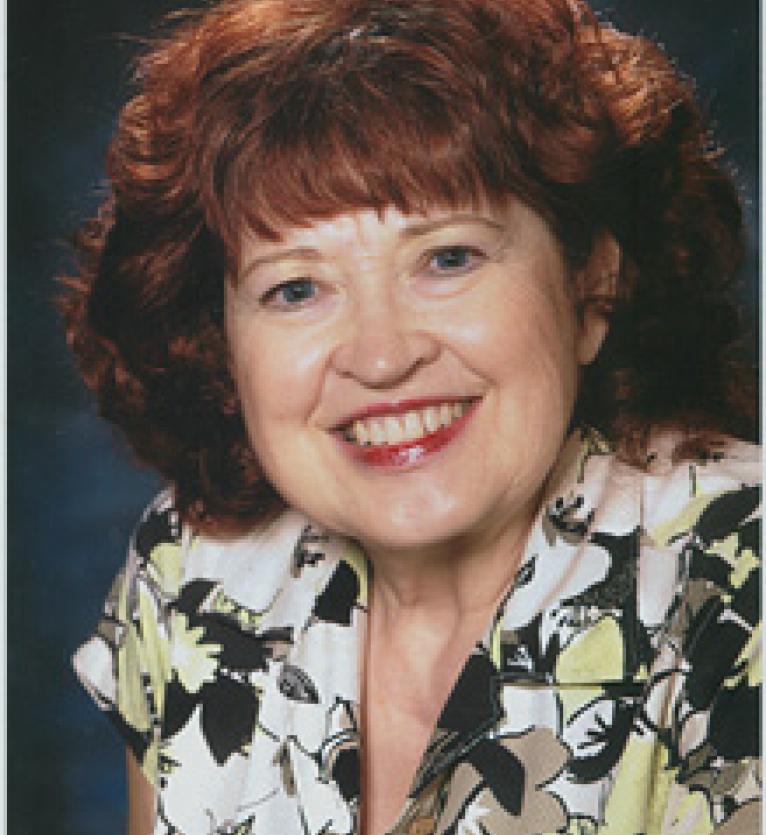
Barbara Dilly
I came to Creighton in 2000 and retired in 2020. My twenty years of teaching, research and service in the Jesuit tradition enhanced my own life. It was an exciting time of celebration. I loved teaching and interacting with Creighton students because they responded so eagerly to the Ignatian pedagogical emphasis on the development of the whole person. It is this spirit of whole person development and celebration of life that I hope to infuse in my reflection writings.
My academic background is eclectic, preparing me well for the Liberal Arts academic environment at Creighton. I earned my BA in World Arts and Cultures from UCLA in 1988 and my Ph.D. in Comparative Cultures from the University of California, Irvine in 1994. My research focused on rural communities in the American Midwest, Latin America, and Australia. I taught Environmental Anthropology, Qualitative Research Methods, Social and Cultural Theory, and Food Studies courses.
I retired to Shell Rock, a small rural community in Northeast Iowa where I enjoy gardening, cooking, quilting, driving my 65 Impala convertible an my 49 Willys Jeepster. I have lots of fun playing my guitars with friends from the Cedar Valley Acoustic Guitar Association. But most importantly, I am still working to make my community and rural America a better place. I host a community quilt studio and serve on the Mission Board of my church. I also serve as the Climate Committee Chair and on the Executive Board of the Center for Rural Affairs.