When I consider the texts for any day, I always try to see how the messages in each of them are connected to the others. To me, some verses are more powerful standing alone, out of the context of the chapter or even book in which they are found. Other verses only make sense to me if I consider them as part of the whole message of the Bible. That is true for today. Each of the readings makes more sense if I reflect on them in the context of making choices to live a life of faith.
The readings in Psalms, Chapter 34, verses 8-13, reminds me that a life of faith is a good life without want or fear. But I must listen carefully to learn how to live such a life. It is not just a matter of learning how to obtain everything we desire or covet. Nor is it about how to escape unpleasant experiences. It is about learning how not to be anxious.
To some extent, all human beings are anxiety neurotics. Our thoughts are ever focused on our physical survival and desires. At one level, our self-preservation motivated anxiety is adaptive. Anxiety can generate personal responsibility and keep us from being a burden on others. But at another level, some of us become unnecessarily preoccupied with trying to control what happens to our lives without developing healthy relationships of interdependence with others and our environment. That is when we need to listen, again, to what Jesus tells us.
In Matthew, Chapter 6:24-34, Jesus says living without anxiety is a matter of making a choice between two very different lifestyles. In Psalms, we are told that the good life, free from want, is associated with not speaking evil or deceit. In his instructions about how to live a life free from anxiety, Jesus tells us that we must make a choice to seek the kingdom of God and God’s righteousness, then everything we need will be given to us. But I don’t think Jesus is just telling me what choices to make between good and evil to get what I need out of life. It’s not that simple. I think Jesus is encouraging me to live my life in faith, mindful that God loves me and cares for me.
Over the years, I have come to accept and celebrate a life that does not have a magic formula for success. The good life is not a life where if I am making good choices, good things will necessarily result. To me, the good life is not a matter of seeking security, but of experiencing confidence in my priorities. Even if I don’t always do it, I know that I need to first seek the kingdom of God and God’s righteousness. If I can’t rise above my concerns for my survival from day to day, I will be anxious all of the time.
Living without worry is not so difficult as trying to be a witness to such a life so that others would know God’s love. If my life goes well but it is not so for other people’s lives, they aren’t receptive to hearing me say that they should first seek the kingdom of God and everything will be added to them. And if things don’t go so well with my life, other people may think that my lack of anxiety is either a sign of arrogance or detachment from reality.
St. Paul’s second letter to the Corinthians makes sense to me only if I put it into the larger context of demonstrating confidence in choosing a life of faith and witness to that faith. Paul reminds me that I am not as effective in my witness if I appear to be too elated. The taboo on getting too excited is consistent with my Lutheran upbringing. But probably also because I am a Lutheran, I am uncomfortable with Paul’s boast of weakness as a model for an anxiety free life. The focus on weakness goes against our self-reliant streaks.
So, in addition to reflecting on the scriptures, it is good for me to reflect on my faith from the perspective of some Catholic traditions I have come to appreciate over the years. When I attend Catholic Masses, I am reminded each time I pray the Lord’s Prayer that it is only through Christ that I can dare to live a life free of anxiety. When I ask that my daily needs be met, I also appreciate hearing the priest interject, “and save us from all unnecessary anxieties.” I don’t think I am one of little faith, but I do need all the help I can get.
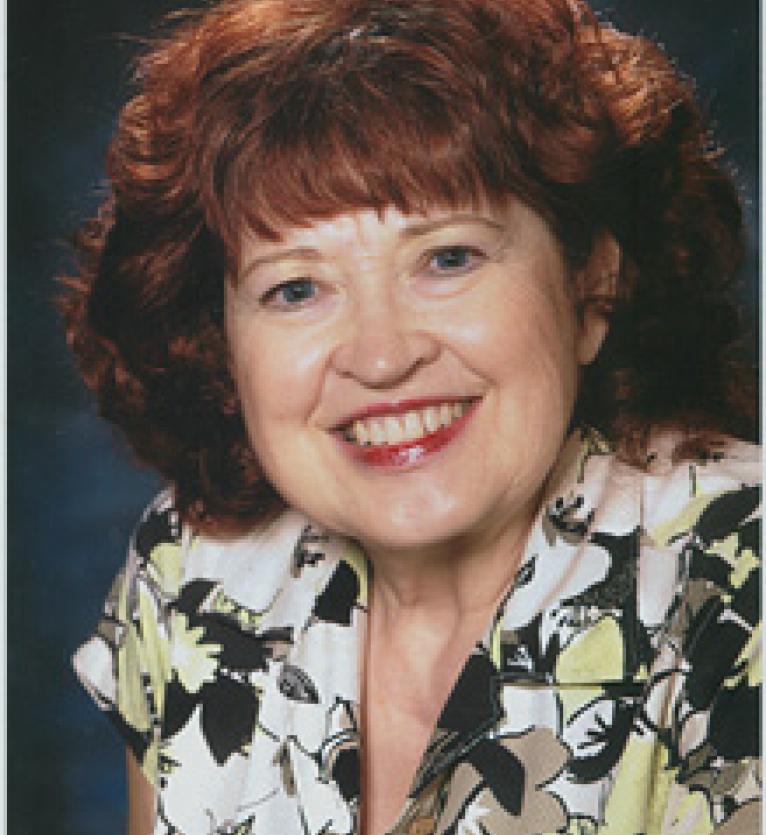
Barbara Dilly
I came to Creighton in 2000 and retired in 2020. My twenty years of teaching, research and service in the Jesuit tradition enhanced my own life. It was an exciting time of celebration. I loved teaching and interacting with Creighton students because they responded so eagerly to the Ignatian pedagogical emphasis on the development of the whole person. It is this spirit of whole person development and celebration of life that I hope to infuse in my reflection writings.
My academic background is eclectic, preparing me well for the Liberal Arts academic environment at Creighton. I earned my BA in World Arts and Cultures from UCLA in 1988 and my Ph.D. in Comparative Cultures from the University of California, Irvine in 1994. My research focused on rural communities in the American Midwest, Latin America, and Australia. I taught Environmental Anthropology, Qualitative Research Methods, Social and Cultural Theory, and Food Studies courses.
I retired to Shell Rock, a small rural community in Northeast Iowa where I enjoy gardening, cooking, quilting, driving my 65 Impala convertible an my 49 Willys Jeepster. I have lots of fun playing my guitars with friends from the Cedar Valley Acoustic Guitar Association. But most importantly, I am still working to make my community and rural America a better place. I host a community quilt studio and serve on the Mission Board of my church. I also serve as the Climate Committee Chair and on the Executive Board of the Center for Rural Affairs.