“I’m sorry.” Such critical, impactful words to speak to one whom we may have harmed, whether through a slight or an intention, large or small. I believe that saying ‘I’m sorry’- genuinely and purposefully - begins the healing process for the recipient of the message, but also for the sender.
“I forgive you” is likewise an impactful response if there is any possible way to find compassion in our hearts, as Jesus asks us to do. Again, I believe that saying ‘I forgive you’ is as important to the healing process as the apology, because it moves both the forgiver and the subject of forgiveness the next step toward unburdened participation in the loving community that God wants for us all. Experts in fields as diverse as medicine, mental health, restorative justice, and social change, among many others, know the cleansing power of seeking, speaking, and living forgiveness - perhaps even willing it into existence!
So, what are my thoughts about Jesus telling us that we must forgive our brethren not seven times, but seventy-seven times, as in today’s Gospel lesson? The cynic in me suspects such a forgiving posture might lead to carelessness or abusiveness on the part of the other: the ‘perpetrator’ of an injustice. But even if that happens, it’s important for us to remember how forgiveness can lighten the load for the harmed: the ‘victim’ of the injustice. Forgiveness does NOT mean opening one’s self up to the potential for continuing abuse; it does NOT require that we avoid setting appropriate boundaries and guardrails that can help us be in a healthy relationship - perhaps in close proximity, perhaps in distance, perhaps in absentia - with the person(s) who has done harm. Forgiveness asks only that we clear OUR hearts. The ‘other’ then has their own decision to make, in terms of what they choose to do with our forgiveness.
Jesus wants to help us clear our hearts of such pain. God’s promise of love is actualized when we can lay down the burden of anger, hatred, or frustration, even when the pain of a physical loss, injury, or death are the outcome requiring a compassionate response. NOT forgiving can deepen and prolong the pain we already carry. True forgiveness can heal it. Jesus is asking us to forgive, always, as he so eloquently did on the Cross. I pray that with God’s help, I’ll be able to meet that call each and every time. Amen.
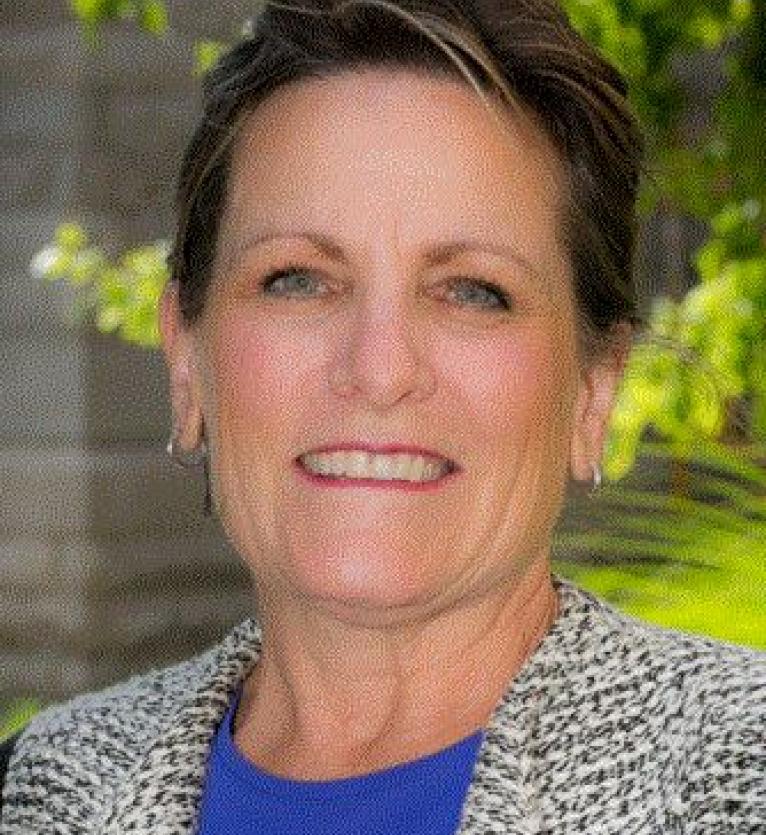
Kimberly Grassmeyer
I’ve been an educator at the postsecondary level for nearly 40 years – both as a Higher Education administrator in Student Affairs work, and as a part-time faculty member – at Creighton University and several other mid-western schools. In the midst of that time, I also worked as a consultant to universities across Canada, the United States and Mexico. It is my honor to be closing out my professional life at Creighton, where my professional, personal and faith values dance together in an enriching partnership.
As a seeker and a sinner I am wholly imperfect, which is to say I am the human that God created me to be. My faith is often quite strong; at other moments it is shaken to its core. I am not a scholar of the Bible nor do I consider myself to be faithful enough or wise enough to lead others in their faith journey…. which is why (apparently) my gracious colleagues believe that I may have something of value to say to the other seekers in the world! I hope that my thoughts and provocations may in some measure provide perspective, pause, laughter, grace, and some peace to you.