In today’s Gospel, we see three types of desire: the desire of the sick man to be healed; the desire of Jesus to heal and do good; and the desire of the Jewish leaders to control others. The Gospel passage highlights the consequences of Jesus healing the sick man. Despite all the opposition, Jesus continues to do good.
The desire to control others is deeply ingrained in the fear of others. In a documentary video called Silent Sacrifice, the narrator explains Executive Order 9066 of 1942 after the attack on Pearl Harbor by the Japanese: “Authority had done its job, removed nearly 120,000 Japanese and Japanese Americans from the West Coast and imprisoned them in 10 camps in California, Arizona, Idaho, Utah, Wyoming, Colorado, and Arkansas… for the United States of America, fear had become stronger than justice.” These innocent Japanese lost their land and businesses, underwent social and psychological stigma, lost hope, and suffered for a crime they never committed.
This “fear” was based on a specious reason, seemingly convincing yet fundamentally flawed. In 1986, President Reagan signed the Civil Liberties Act, an apology for the incarceration of Japanese Americans. While fear is understandable, acting on fear to dehumanize fellow human beings is never justified. Dehumanization marginalizes everyone, including the oppressor, because dehumanization is our vocation.
In contrast to fear is love. Commitment is a necessity for love. According to John Futrell S.J., Christian discernment “involves choosing the way of the light of Christ and living out the consequences of this choice… and actions are demanded to follow Christ here and now.” In this commitment to do good, God heals our fears and blesses us to live a human vocation.
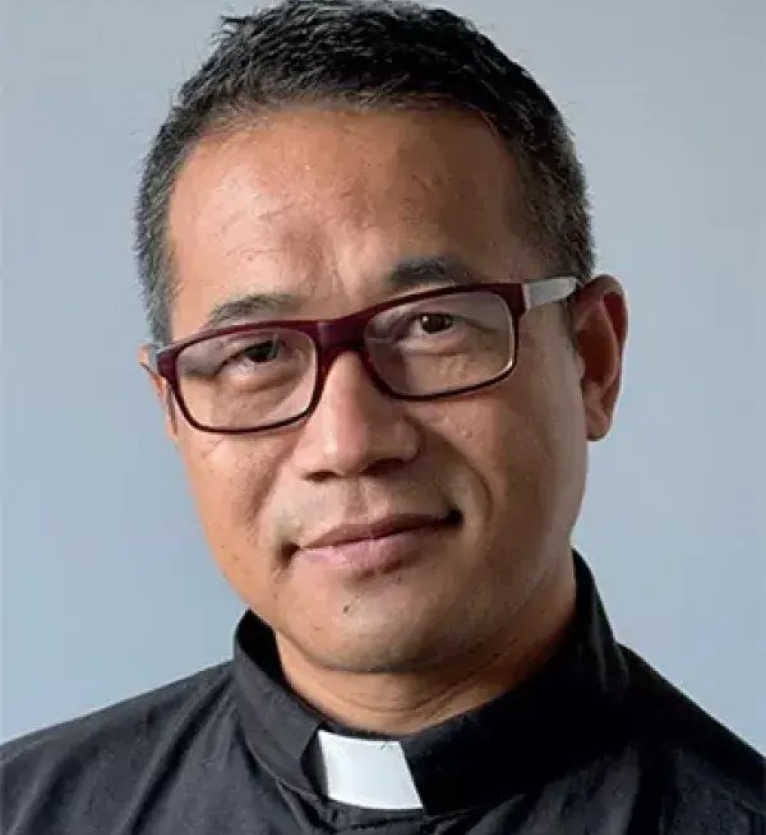
Rev. George Meze, SJ
I am Fr. Vilezo George Meze SJ, originally from India. I am doing my EdD studies and serve as a spiritual director with Campus Ministry. Before coming to the U.S., I spent a decade working in school administration among Indigenous communities in Northeast India.