In a world where political instability, division, and injustice seem to grow more pronounced by the day, today’s readings may provide insights that challenge and comfort those seeking peace and justice amid turmoil.
The reading from Isaiah speaks of God’s promise to restore and redeem His people. I see it as a reminder that God is a source of both comfort and justice, bringing about a day when the desolate places of our lives and world will be transformed for the better. I find that this passage has particular relevance in the context of the current political climate. I live in a world marked by fragmentation and suffering, a world touched by wars, refugee crises, systemic poverty, or environmental degradation. Isaiah’s words offer healing for the weary heart, reminding me that God’s justice and mercy are steadfast. I may feel helpless in the face of so much evil, but God is actively working to “bring forth righteousness.” This restorative justice can set right what is wrong, heal what is broken, and ultimately bring peace. It is easy to feel isolated or insignificant in a world that seems indifferent or hostile to human suffering, but God’s promise of restoration underscores that our struggles are seen, known, and loved by the Creator.
In today’s Gospel, Jesus declares His divine authority, emphasizing that He does not act on His own but in perfect unity with the Father. He speaks of the works that He does. These are actions that mirror God’s justice and mercy in the world. Jesus’ assertion of divine authority challenges me to reflect on how I understand justice, authority, and compassion in my own life. In the context of contemporary political turmoil, where many are weighed down by the oppression of authoritarian regimes, wars, and deep societal divides, Jesus’ actions show me that true life and justice cannot be found in human power alone. Political systems may fail me, but the kingdom of God, which transcends earthly politics, is one that is rooted in truth, justice, and mercy. There is also a call to personal responsibility in this passage. In the face of injustice and political strife, I find myself called to listen to Christ’s words and seek justice, practice mercy, and stand with the oppressed. This is not an abstract call but one that asks me to act in the world as an agent of God’s kingdom as I navigate the complexities and injustices of human systems.
The challenges of human conflict, economic inequality, political corruption, environmental crises, and social fragmentation are immense. I feel that I cannot ignore the call to engage with these issues through the lens of faith. Both Isaiah and John offer a vision of a world restored to righteousness through divine intervention, but I do not see this vision as something passive. I feel that there is an imperative for my personal action. That is the focus of my prayer today.
Dear Lord, I struggle to understand the frequent hardness of human hearts. On a personal level, I worry for my children and grandchildren. Help me to find peace as I strive to discern my mission. Open my heart and my mind to your call. Guide my actions as an agent of Your kingdom.
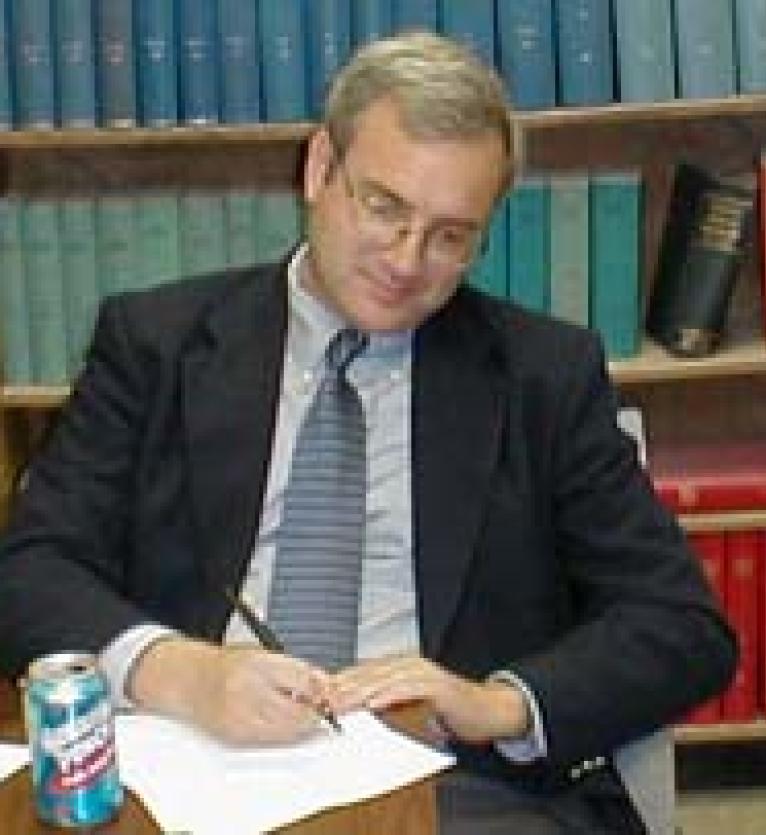
Mike Cherney
I grew up in Milwaukee and have lived in Madison, St. Paul, Hamburg, Geneva, Omaha and Boston. I taught for 27 years in the Creighton Physics Department. Now I am mostly retired and have returned to the Milwaukee area where my wife recently became President of Mount Mary University. I continue to work with Creighton students on projects in high energy nuclear physics at Brookhaven National Laboratory on Long Island and at CERN just outside Geneva, Switzerland. We have two sons and three grandchildren who all live in the northern suburbs of Chicago.
I am a person who asks questions. This often leads me down a challenging path.