I sat at a dinner table on Monday night as a houseguest of a wonderful couple. Mark and Lou had also been invited after becoming friends with the family who had served them in a daily breakfast program for homeless and near-homeless people. I watched as the men were hugged, kissed and made to feel as welcome as I was. In conversation, I compared grandchildren with Mark and he showed me his latest family photos, and as a dinner companion he was sharp and funny and full of good stories. Mark talked about his anger management issues and said that last year he had contacted his father for the first time in many years, to say he loved him and was sorry for whatever had separated them. He currently lives in the back of his tiny pickup truck.
When I mentioned a book we were reading for Lent on campus, The Return of the Prodigal Son by Henri Nouwen, Lou nodded and said he had read it many years ago and talked about how wonderful it was. He was lovingly teased about his pseudo-gruff manner and was a part of the host family’s Christmas each year. He looked weathered and worn and, in answer to a question, said he once had spent 15 years living on the streets.
Kate, one of my hosts, is deeply involved in the breakfast ministry and with the 150 people who come each morning to be greeted warmly, usually by name. Kate and the other staff know many of the stories of those they serve.
I was struck by the example of living faith set by Kate to her family, her co-workers and to those who are served each morning. With loving kindness, she sets the tone for the program, diffusing tensions, smiling joyfully and thanking volunteer workers gratefully. In the readings for tonight’s Mass of the Lord’s Supper, we see many examples of how to live our lives, including Jesus doing something extraordinary to set an example for all of us.
In the first reading from Exodus, the Lord tells Moses and Aaron how to celebrate the Passover, giving them instructions about preparing the lamb for dinner, the herbs and bread. Then the Lord tells them to eat “with your loins girt, sandals on your feet and your staff in hand … like those who are in flight.”
In John’s gospel, we see Jesus offer a new set of instructions for us. As he and his disciples gathered for their Passover dinner, John tells us “He loved his own in the world and he loved them to the end. This moving line on the night before his death reminds us of how deep his love for us is.
During the supper, Jesus, their rabbi and teacher, got up from the table, took off his cloak and knelt on the floor to wash the feet of each of them. We can imagine their incredulous discomfort as this man they loved and looked up to, took on the most humbling role of a servant for them. As he knelt on the stone floor in front of each one of them, he took their well-worn feet, calloused, bruised and perhaps still dusty, into his hands. They may have watched, squirming slightly, as he poured water over each foot and carefully washed it, drying it tenderly with the towel around his waist.
When he returned to the table he asked if they recognized “what I have done for you? I have given you a model to follow.” Jesus has set THE example for us of how we are to live our lives, as servants. “As I have done for you, you should also do.”
Pope Francis has given us a modern version of this powerful example. Since his papacy began three years ago, he started a tradition of washing the feet of those who are outcasts among us. He has celebrated this Mass in a youth prison, a center for elderly and disabled people and then a detention center on the edge of Rome. In those places, the successor of Peter washes the tattooed, swollen and sometimes disfigured feet of these marginalized men and women, kissing each foot tenderly before moving on to the next person. Last year, as detained men and women wept openly, Francis told them “The love that Jesus has for us is so big that he became a slave to serve us, to take care of us, to purify us.”
The power of this night comes for me when I experience the connection between the foot washing and the Eucharist. The way he gives his body and blood to me is the way he wants me to give my body and blood for others. When I receive the Eucharist in my hands tonight, I want to hear him say, “Do this in memory of me.” And tonight, when I hold his broken and poured out body in my hands to feed me, I will think of my husband, my children, my grandchildren and how I can love them more. If I let myself enter the moment deeply, I will also think about all the people in the world whose cries I don’t let myself hear very often. I will think of Lou and Mark and how during that sacred dinner, they were transformed from “homeless people” into very real human beings I grew to love in a short time.
As I receive Jesus’ example and allow him to wash me, feed me and show me how to wash the feet of others, I will remember the example of this one who loves and forgives me endlessly. And, I will leave Mass tonight, praying to see with the eyes of Jesus and to recognize those on the margins as men and women who have had difficult lives and are endlessly deserving of my love and care.
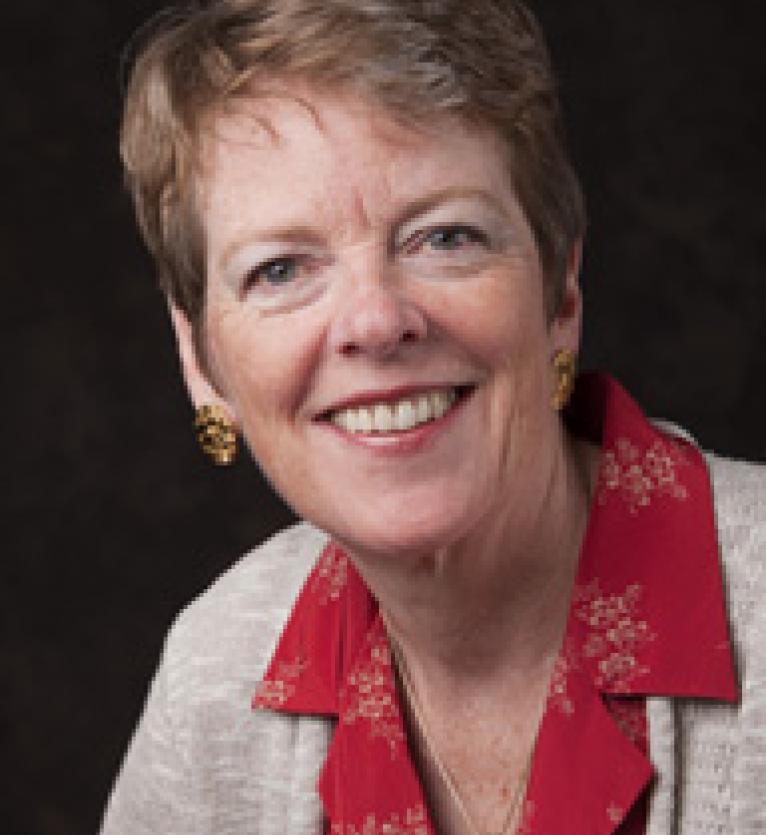
Maureen McCann Waldron
The most important part of my life is my family – Jim my husband of 47 years and our two children. Our daughter Katy, a banker here in Omaha, and her husband John, have three wonderful children: Charlotte, Daniel and Elizabeth Grace. Our son Jack and his wife, Ellie, have added to our joy with their sons, Peter and Joseph.
I think family life is an incredible way to find God, even in (or maybe I should say, especially in) the most frustrating or mundane moments.
I am a native of the East Coast after graduating in 1971 from Archbishop John Carroll High School in suburban Philadelphia. I graduated from Creighton University in 1975 with a degree in Journalism and spent most of the next 20 years in corporate public relations in Omaha. I returned to Creighton in the 1990s and completed a master’s degree in Christian Spirituality in 1998.
As our children were growing up, my favorite times were always family dinners at home when the four of us would talk about our days. But now that our kids are gone from home, my husband and I have rediscovered how nice it is to have a quiet dinner together. I also have a special place in my heart for family vacations when the kids were little and four of us were away from home together. It’s a joy to be with my growing family.
Writing a Daily Reflection is always a graced moment, because only with God’s help could I ever write one. I know my own life is hectic, disjointed and imperfect and I know most of us have lives like that. I usually write from that point of view and I always seem to find some sentence, some word in the readings that speaks right to me, in all of my imperfection. I hope that whatever I write is in some way supportive of others.
It’s an incredibly humbling experience to hear from someone who was touched by something I wrote. Whether the note is from someone across campus or across the world, it makes me realize how connected we are all in our longing to grow closer to God.