The readings for today present a consistent theme: The Lord repays those who observe the commandments! But the message is clear for people who select out the Old Testament verse “and he will give back to you sevenfold” as some sort of calculation for gain. The next verse says, “But offer not bribes, these he does not accept!” My reflection focuses on how we see evidence that those who give up anything to follow Jesus will receive a hundred times more than they gave up.
In my witness to the faith, I am often asked by persons who do not believe in the saving power of God, “why do you want to join a church that constantly makes demands on your time and money?” They think there must be empirical evidence of practical benefits. They don’t want to go to church because they don’t want to give money or be held accountable for their lifestyles by people they consider to be less than perfect themselves. I must admit that the answers to such questions are difficult to summarize in the short time most people give you for your response, especially when they really don’t want to hear the answer anyway. But the lessons for today are helpful here.
In response to unbelievers, I always admit that I don’t give that much money to the church. I am not a 10% tither. Not very many people are. And while the Bible encourages sacrifices of money, that is not what God expects from us. Rather, I think it is important to reflect on how God blesses us in our efforts to praise God with our lives in any way that we can. I like the verse in Sir 35 that says “appear not before the Lord empty-handed.” It is not what we give, but the spirit in which we do it that matters to God. We can’t trust in the sacrifice of giving tithes expecting to be rewarded for points we score; that’s a bribe and God will not accept it. What God does accept is a generous spirit that makes joyful and cheerful contributions to the glory of God.
That’s the message, I think, that each church should convey to the surrounding community. People are more likely to be attracted to worship and fellowship if we value and cultivate generous spirits than if we demand sacrifices. I am reminded of what my pastor said when I joined my current congregation. I was apologetic when I told him that I really didn’t have much time to serve on committees or sing in the choir. I also confessed that I do not give 10% of my income to the church. I admit, it sounded a lot like I thought I had to “bribe” him to get in. To my surprise, he said, “We have a lot of very generous people in this congregation. We don’t really need more money or more people to serve on committees. What we really need are more people to just live good lives and who will come to church on Sunday to offer praise as their sacrifice to God.”
So that is what I do and God repays me by showing me the saving power of God. And while that doesn’t translate to winning lottery tickets, it does mean spiritual enrichment. The more God shows me God’s saving power, the more I want to participate in the generous spirit that is so evident in my congregation. I am growing in my giving, and I am serving on the worship and education committees. But I am never asked for more, only thanked for what I give. Here is a powerful example. This week the congregation worship and education leaders were all invited to a catered lasagna supper in the fellowship hall in appreciation for our offerings of our gifts. After dessert, the pastor cheerfully informed the gathering of the faithful of the progress of the renovation projects on our 100 year old church. Since we are the leaders, he wanted us to have information to share when other people ask us what is going on. They’ve gone over the one million dollar approved budget, he reported. But he didn’t ask us for more money. He presented the entire matter as evidence of the ongoing covenant our congregation has with God. He reviewed the maintenance history of the church and gratefully concluded that because the members have been so generous in the past, everything has lasted way longer than could be expected. And due to the generosity of the current membership, the renovations underway should serve the church well for another 50-100 years. We now all have the facts. We can share them with others.
There won’t be a sermon about tithing. But the money will come in. Telling stories like this is the best way I can think of to witness to unbelievers about the saving power of God. I let them wonder about whether I sent in a check or not.
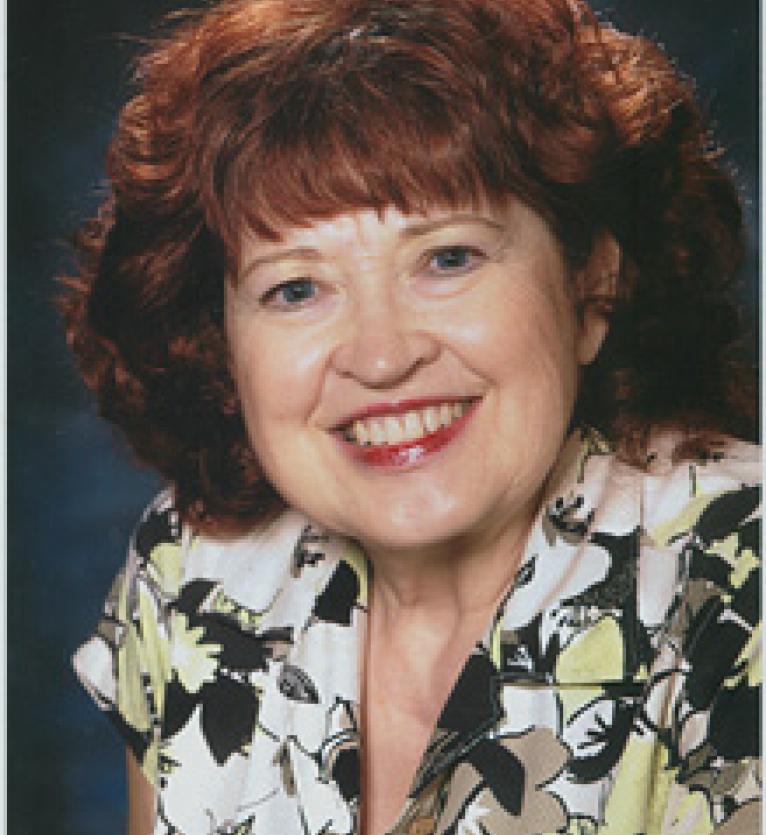
Barbara Dilly
I came to Creighton in 2000 and retired in 2020. My twenty years of teaching, research and service in the Jesuit tradition enhanced my own life. It was an exciting time of celebration. I loved teaching and interacting with Creighton students because they responded so eagerly to the Ignatian pedagogical emphasis on the development of the whole person. It is this spirit of whole person development and celebration of life that I hope to infuse in my reflection writings.
My academic background is eclectic, preparing me well for the Liberal Arts academic environment at Creighton. I earned my BA in World Arts and Cultures from UCLA in 1988 and my Ph.D. in Comparative Cultures from the University of California, Irvine in 1994. My research focused on rural communities in the American Midwest, Latin America, and Australia. I taught Environmental Anthropology, Qualitative Research Methods, Social and Cultural Theory, and Food Studies courses.
I retired to Shell Rock, a small rural community in Northeast Iowa where I enjoy gardening, cooking, quilting, driving my 65 Impala convertible an my 49 Willys Jeepster. I have lots of fun playing my guitars with friends from the Cedar Valley Acoustic Guitar Association. But most importantly, I am still working to make my community and rural America a better place. I host a community quilt studio and serve on the Mission Board of my church. I also serve as the Climate Committee Chair and on the Executive Board of the Center for Rural Affairs.