Most of us are certainly aware of the doctrinal debates regarding the practices of baptism that have divided Christians for centuries. To date there is no uniform set of doctrines regarding the practice that all Christians hold central to their faith. And while we are divided on this, most of us are in agreement that it isn’t about the exact words we say in the sacrament of Holy Baptism, or the time and the place, but rather the acknowledgement of the living presence of God as we receive the Holy Spirit that matters. Therefore, we all do it. The lessons for today assert that it doesn’t matter how or where we are baptized, but whether we are living it. Our baptisms should serve as a constant reminder to examine what is our life in the spirit? What does the gift of the Holy Spirit mean for us?
I have heard it wisely said that baptism is a starting point, not an ending point. Whether we come to it on our own, or our parents bring us, baptism means we have a lot of learning ahead of us in how to live in the fulfillment and transformation for which we are claimed. Yet, most of us aren’t reminded of that every day. We remember our baptism as a sentimental memory of a lovely day in which our parents and other family members gathered to celebrate our receipt of the Holy Spirit and our welcome into a family of God. We have certificates that we keep in special places and we know the event is recorded in church records. It is a big deal in the life of the church. I love it when our pastor holds up these tiny little blessings and introduces a new brother or sister in Christ as the entire congregation welcomes him or her with a resounding applause. Parents and friends stand by proudly. Then there are photos and a special lunch or dinner. And then?
We all know all too often two paths that are taken after that. One is that the child is brought to Sunday School and learns to live a life in the church. The other is that we never see them again. But as I reflect on these lessons today, I think there are many other outcomes to this scenario. One is that the child learns to live a life in the church but doesn’t learn to live in the Spirit. And a child that never goes to church can often be awakened to life in the Spirit. So not only is it our call to determine the appropriate words that must be said at the baptism ceremony, it is not our call to determine for sure whether someone is living in the Spirit with or without baptism. What is our call as baptized children of God? That is the question I reflect on here today.
To me, my baptism calls me to daily repentance. It calls me to daily awareness of and openness to the spirit that fills me with hope and guides my life. And while Christianity calls us all to an outward focused ministry of teaching and preaching, I have learned that faith is also an equally inward call. And believe me, at 70, I am still learning. I am called to continually examine my heart. Am I living my faith in Christ through showing love, compassion, humility, patience and forgiveness of others? Or am I still living in the habits of my sins? For most of us, living in the Spirit requires much more faith and devotion than simply living by a set of doctrinal rules. Paul’s letters to newly formed Christian communities seemed often to be about liberating Christians from seeking to define the Christian community by a set of rules to moving them to something higher. Those letters speak well to us. The lessons for today help me reflect on the gift of the Holy Spirit in my baptism. My openness to Its presence can keep me focused on eternal matters, not the things of this earth. I pray for that openness today for all of us.
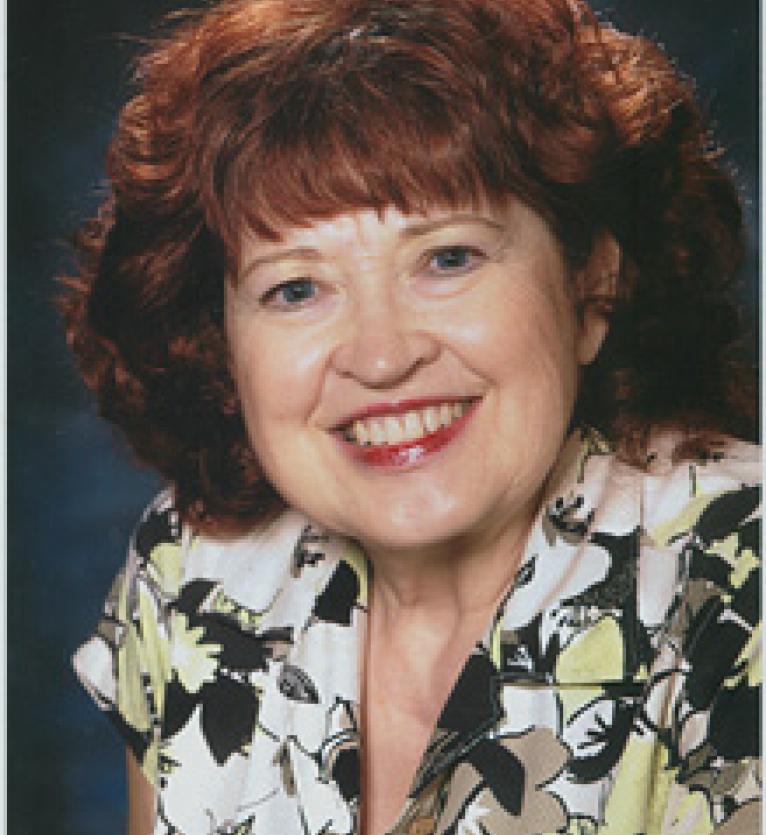
Barbara Dilly
I came to Creighton in 2000 and retired in 2020. My twenty years of teaching, research and service in the Jesuit tradition enhanced my own life. It was an exciting time of celebration. I loved teaching and interacting with Creighton students because they responded so eagerly to the Ignatian pedagogical emphasis on the development of the whole person. It is this spirit of whole person development and celebration of life that I hope to infuse in my reflection writings.
My academic background is eclectic, preparing me well for the Liberal Arts academic environment at Creighton. I earned my BA in World Arts and Cultures from UCLA in 1988 and my Ph.D. in Comparative Cultures from the University of California, Irvine in 1994. My research focused on rural communities in the American Midwest, Latin America, and Australia. I taught Environmental Anthropology, Qualitative Research Methods, Social and Cultural Theory, and Food Studies courses.
I retired to Shell Rock, a small rural community in Northeast Iowa where I enjoy gardening, cooking, quilting, driving my 65 Impala convertible an my 49 Willys Jeepster. I have lots of fun playing my guitars with friends from the Cedar Valley Acoustic Guitar Association. But most importantly, I am still working to make my community and rural America a better place. I host a community quilt studio and serve on the Mission Board of my church. I also serve as the Climate Committee Chair and on the Executive Board of the Center for Rural Affairs.