I grew up with a traditional Catholic childhood. The Baltimore Catechism was the standard of religious education for my first four years of grade school. The impact of the Second Vatican Council arrived when I was in the fifth grade. The textbooks for religion class changed from memorization lists to sources of open-ended questions. Today’s readings seem to call me to wonder about the comforts of an “old” faith.
The nuns had ingrained habits that I retain today. In grade school we prayed everywhere and often. Nothing was too mundane. These habits persist. I am aware of the many times each week I continue to go to God in prayer asking for intervention for my family. (I pray that my teenage son gets home safely. I pray that I find my car keys. I pray that my older son succeeds in his coursework while away at school. I pray that my wife overcomes a difficulty at work.) I think about how powerful intermittent positive reinforcement is establishing a behavior. I become trained in a way of doing things. Sticking with something good is easier and more pleasant than venturing into the new. I can relate to the desire of some in the early church to stick with the ritual that had been learned, the ritual that had become part of the culture. In the first reading I see two different worlds clashing, both with the thought that the way in which they are accustomed is the way to proceed. The first reading, the responsorial psalm and the Gospel leave me with some satisfaction with sticking to a tradition. I think back to the turmoil as we underwent the transition to the world of the Second Vatican Council and compare it to today’s first reading.
The passage from Acts and the Gospel also take me in a second direction. They reveal a challenge which is present in our faith tradition, even from the times of the early church. I find it interesting and encouraging that the early church leaders embraced discussion, a desire to better understand and a willingness to address matters of religious practice with the larger community. Although there may not be an inherent desire for change, there seems to be an inherent willingness to change. The Gospel even seems to demand a change.
The image of the vine in the Gospel seems to wed these two seemly disparate views. When I think of the vineyards I see a special kind of growth. It is not freestanding and independent. The vine attaches itself to the supports that are present. The vine is stronger because it holds on. Still the vine is dynamic, growing rapidly and exploring new territory. To me the vine symbolizes a development that is constantly reaching out and adding to the body that it embraces.
Today I pray in gratitude for my tradition, but I also pray for the openness and desire to grow. I pray for a better understanding of my roots. I pray for the ability to build on the strengths of these roots. I pray for the willingness to become more encompassing.
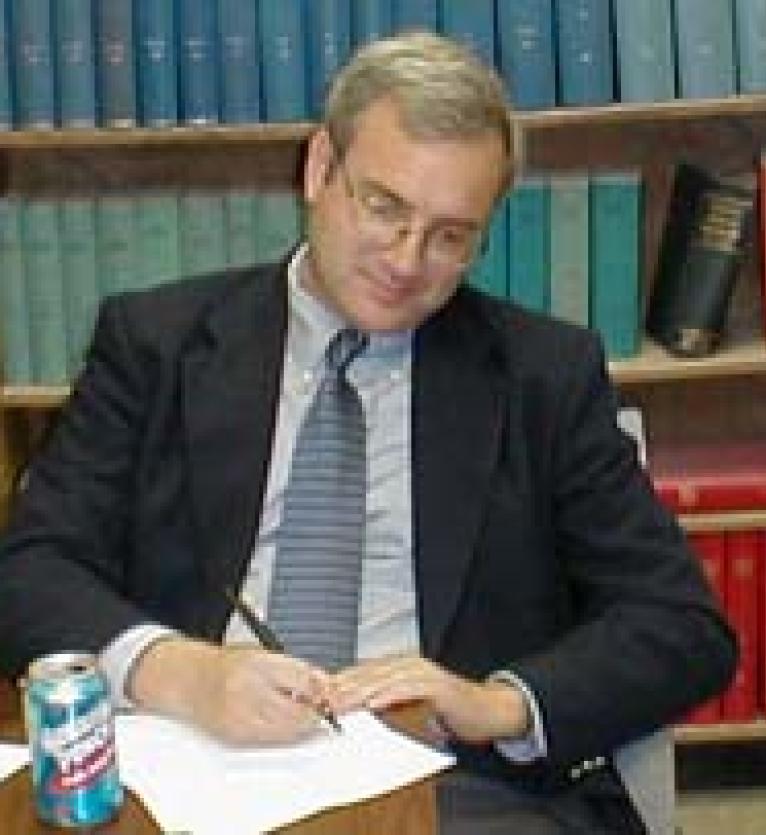
Mike Cherney
I grew up in Milwaukee and have lived in Madison, St. Paul, Hamburg, Geneva, Omaha and Boston. I taught for 27 years in the Creighton Physics Department. Now I am mostly retired and have returned to the Milwaukee area where my wife recently became President of Mount Mary University. I continue to work with Creighton students on projects in high energy nuclear physics at Brookhaven National Laboratory on Long Island and at CERN just outside Geneva, Switzerland. We have two sons and three grandchildren who all live in the northern suburbs of Chicago.
I am a person who asks questions. This often leads me down a challenging path.