Today’s readings invite me to think about cleansing and rebuilding. This pertains to the Temple restoration after the Maccabean Revolt, and to Jesus’ driving out those selling goods in the Temple area. I feel invited to consider not just the physical building of the temple, but the temple of my own life.
The cleansing of the Temple is in all four gospels. Today’s is from Luke, but the other versions are in the back of my mind. In Matthew, Mark, and John, Jesus doesn’t just drive others out, he is flipping tables. In John, we get the additional connection between the Temple building and Jesus’ own life. This is where today’s readings lead me.
As a disciple, my life should be intertwined with Jesus’ life. When I participate in Eucharist, I believe that Jesus’ life dwells in the temple of my own body. I must ask, then, does my life look like a temple? This is not about purity culture, which is often how this connection is framed. This is about who and how I am in the world. What needs to be driven out in me, and what needs to be rebuilt?
If my life is to be a place of encounter with the Divine, there are problematic things that need attention. A good examination of conscience can help with this. I need to notice first, so that I can do the work of rooting out (a lifelong, ongoing task for me so far!). But this focus on fault is insufficient. Jesus didn’t just drive out those making a profit, he also proceeded to add his own teaching to the Temple area in the days that followed. The Maccabees didn’t just clear out defilement; they rededicated and offered new prayers.
Cleansing and rebuilding go hand-in-hand. What might this look like in my own life? Saying yes to one thing means saying no to others. If I say “yes” to being attentive to the person in front of me, that means I have to say “no” to the unlimited distraction of my phone. I don’t do this perfectly, but the more I’m aware of the choice, the easier it is. Saying “yes” to feeding my neighbor may mean saying “no” to excessive eating out myself. In Ignatian spirituality, we might call this “freedom from” and “freedom for.” I have to be free from this if I am to be free for that.
For me, this puts my own moral development in a more positive light. I do need to pay attention to those parts of myself and my life that impede my path to holiness, but I also need to create space for grace to flourish. It is the twofold effort of cleansing and rebuilding. This is lifelong work. I do not expect my temple will ever be fully, permanently swept clean (at least not by my own effort), but I can still work with God to rebuild, rededicate, and to offer my life as a place of encounter.
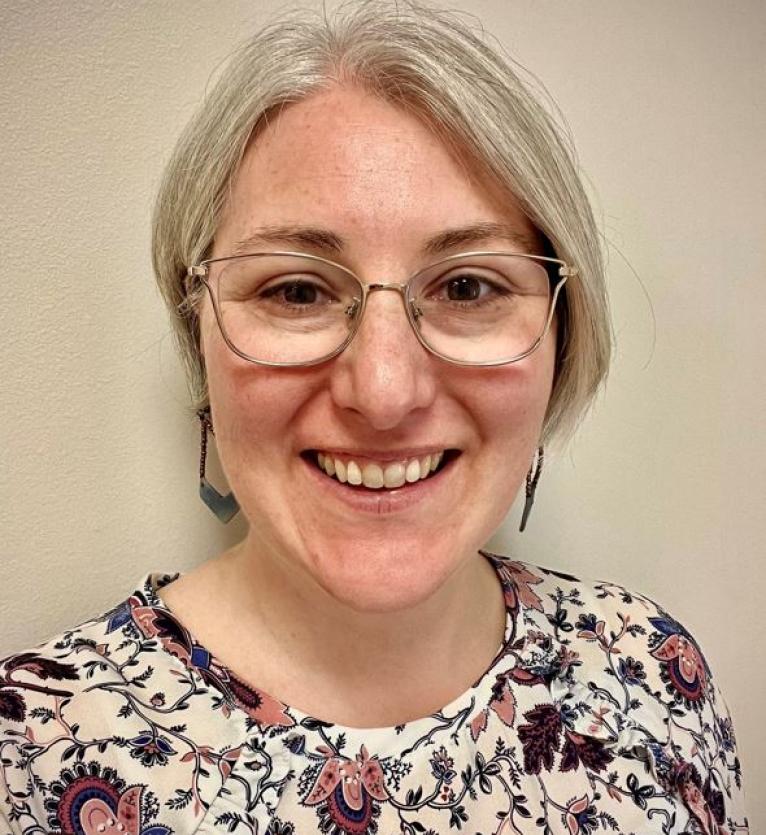
Sara Schulte-Bukowinski
Originally from central Nebraska, where my home diocese of Grand Island nurtured vocations to lay ministry, I pursued Divinity studies and completed my M.Div. at the Jesuit School of Theology at Berkeley in 2007. After 12 years of providing formation and education in Catholic schools, I spent 7 years as a lay pastoral minister (Parish Life Director) at St. John’s, Omaha’s Jesuit Parish. Most recently I took on another new role, now as Director of the Deglman Center for Ignatian Spirituality here at Creighton University. I live in Omaha with my husband Adam, our dog Lilly, and as of 2022 my parents-in-law Ann and George.
In graduate school I was fortunate to take a course from the illustrious theologian and Johannine scholar, Saundra Schneiders. I still remember her talking about the location where ongoing scriptural revelation occurs—in the space between the page and the eyes of the reader. This is where the Divine meets the realities of our lives, in our time and place. I look forward to sharing this encounter together as part of this reflection team.