Today’s feast celebrates not just a building, but a profound truth — that God chooses to dwell among His people and within them. The Lateran Basilica, the cathedral of the Pope as Bishop of Rome, is the “mother and head of all churches.” Its dedication reminds us that every sacred space, from the grandest basilica to the humblest chapel, points to an even more sacred reality: We ourselves are the living temples of God. The readings of the day beautifully trace this divine presence from the temple in Ezekiel’s vision, where life-giving water flows from the sanctuary, to St. Paul’s bold proclamation that “you are God’s temple,” and finally to Jesus’ revelation of His body as the true temple of God. These are not separate truths but a movement: from the physical temple to the human heart, from structure to spirit.
It is in this light that we should understand the Gospel event in which Jesus cleanses the temple. In him, there is more zeal than anger— zeal for the holiness of God’s dwelling. Jesus’ action reveals that worship is not about commerce or convenience; it is about communion. The Feast of the Lateran Basilica, therefore, calls us to the truth that we are not just visitors to the temple; we ourselves are the temple. The real dedication celebrated today is not of stones and marbles, but of hearts ready to welcome the Divine.
Our task, then, is to let the living water of God’s grace flow from us — into our relationships, communities, and the wounded world around us. When we live as God’s dwelling, our words heal, our actions nourish, and our presence brings peace. Hence, today’s feast is a timely reminder for us to examine the “marketplaces” within ourselves— the distractions, inordinate or disordered attachments, addictions, and compromises—that turn our sacred spaces, both physical and spiritual, into places of transaction rather than transformation. The same Christ who overturned tables in Jerusalem wants to overturn whatever clutters the inner temple of our lives today, so that the Spirit can dwell freely in us, and our communion with God becomes fuller.
Introspective Questions:
- How can I allow God’s living water to flow through me and bring life and healing to me and to others through me?
- What “moneychangers” or “distractions” need to be driven out from the temple of my heart to make room for God’s true and free presence within it?
- In what ways can I honor and care for the true and living “temple” that is both my body and my community, recognizing that God’s Spirit dwells within?
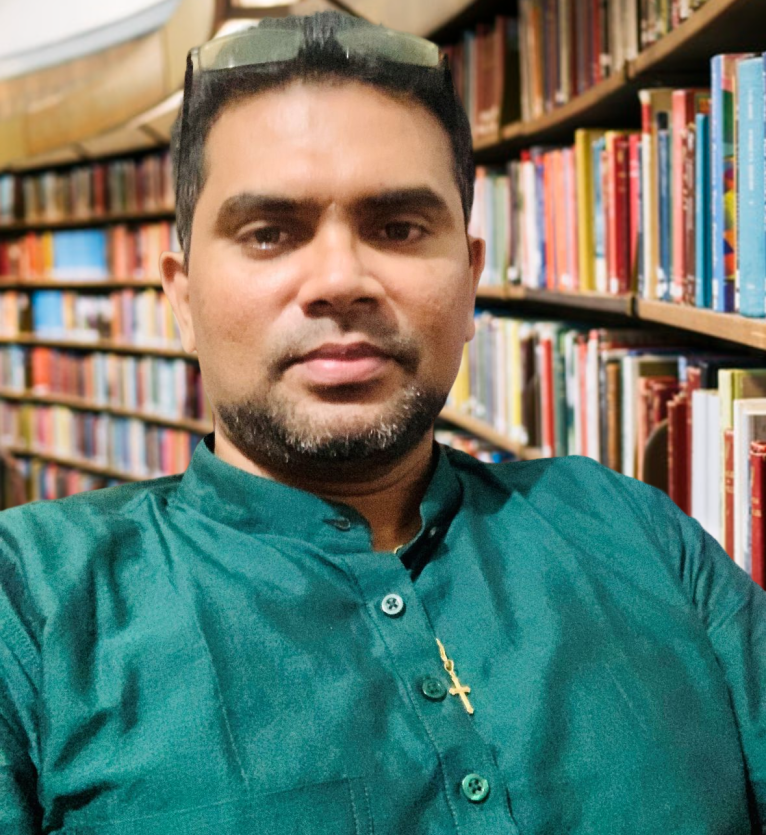
Rev. Rashmi Fernando, SJ
I am a Jesuit priest and educator from the island nation of Sri Lanka, historically known as Serendib or Ceylon. I have been blessed to receive Jesuit formation and higher education across Asia, Europe, and America. Most recently, I earned my Doctorate in Interdisciplinary Leadership in Education (Ed.D.) from Creighton University in Omaha, Nebraska, USA, where my dissertation explored global citizenship through the lens of undergraduates’ study-abroad experiences. Deeply convinced of the power of positive narratives that education can create, I believe it holds the key to addressing the ‘care-crises’ that weigh upon humanity and our shared ‘common home,’ while also emancipating individuals and communities. In addition to serving as an online faculty member with Jesuit Worldwide Learning (JWL)—Jesuit Higher Education in the Margins— to students in Africa and the Middle East, I am currently assigned to Loyola Marymount University, Los Angeles, CA, USA.
Determined to make a distinctive, active, and intellectually grounded contribution through Jesuit higher education, I am deeply passionate about reading, writing, and teaching on global citizenship, interdisciplinary leadership, and justice and peacebuilding. In this spirit, I hold close the words of Helen Steiner Rice: “Life is a fabric, weave it with tender care; Upon the loom of life, your pattern is rare.” While I cherish the uniqueness that defines my own life and journey, I am equally committed and eager to recognizing, celebrating, and defending the uniqueness of others—believing that true beauty is revealed where there is unity in diversity, and diversity in unity.
Keep smiling—because God loves you always! I mean, ALWAYS!